%20(1)-B86R08ZzwhPzS6UZbG3mSxRWPCwGwn.png)


Most advice about Similarweb alternatives starts with the wrong question. People ask which tool looks most like Similarweb, then end up paying for a dashboard that doesn't match the job they need done. After years of using traffic estimators, SEO suites, and audience tools side by side, I've found the choice is simpler, and sharper, you're choosing between market intelligence und SEO execution. If you need the traffic mix and channel view, one type of tool fits. If you need the exact keywords, pages, and links behind competitor growth, another type wins.
That's why I don't shop these tools by logo or UI polish. I start with the question I need answered, then I pick the platform that gets me there fastest without forcing me to buy data I won't use. Similarweb is strong for broad traffic estimation, but the alternatives below are the ones I'd put into a working stack when I need competitor gaps, backlink targets, rank tracking, or audience context. For anyone building a marketing ops stack, I'd also point you to this useful collection on marketing analytics for sales pros.
Inhaltsverzeichnis
- 1. SemDash
- 2. Semrush Traffic and Market Toolkit
- 3. Ahrefs
- 4. SE Ranking
- 5. Serpstat
- 6. SpyFu
- 7. SISTRIX
- 8. Sensor Tower
- 9. Comscore
- 10. Nielsen
- Top 10 SimilarWeb Alternatives, Feature Comparison
- My Final Take: How to Choose Your Next Analytics Tool
1. SemDash
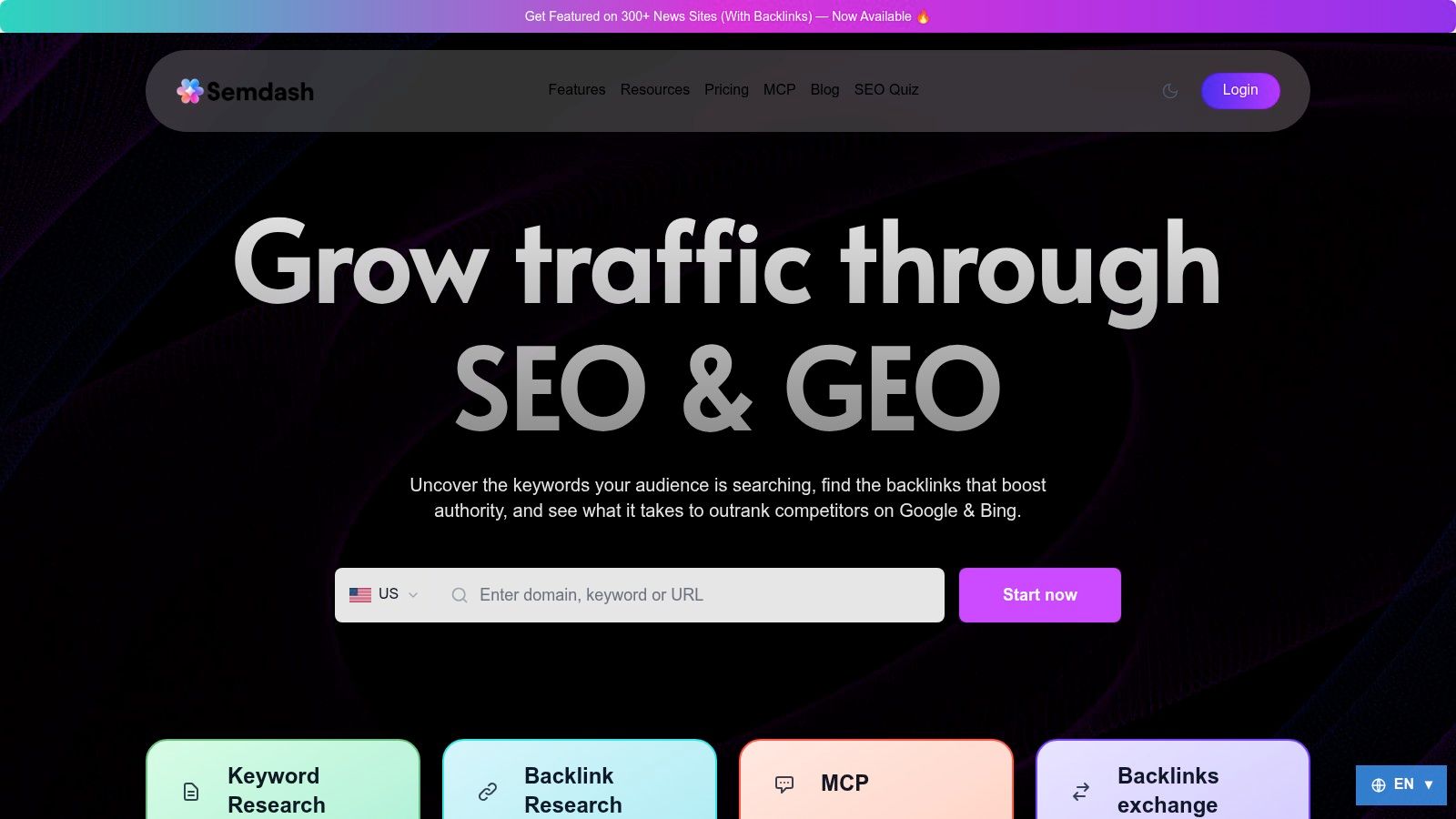
SemDash is the one I reach for when I want competitor SEO intelligence without paying enterprise pricing for every seat and workflow. The reason it belongs at the top of a similarweb alternatives list is simple, it gives you the kind of domain-level and URL-level mapping I need when I'm trying to reverse-engineer what drives search traffic, not just admire a traffic total. Its website says it is built as a cloud SEO research and analysis platform, and that framing matches the way I'd use it in an agency or in-house growth team.
Why SemDash stands out
The strongest part of SemDash is how it turns raw competitive data into actions. I care about keyword discovery, Keyword Gap, Backlink Gap, top pages, and SERP history because those are the things that tell me where to publish, what to link to, and which pages deserve outreach. The product also leans hard into practical workflows, with AI Overviews-Sichtbarkeit, an MCP connector for Claude or ChatGPT, clustering, and AI-assisted content briefs, which matters if your team is trying to move from research to publishing fast.
Praktische Regel: if I can't get from “who's winning?” to “what do we do next?” in a few clicks, the tool usually ends up as a reporting widget instead of a growth system.
SemDash also feels built for the messy middle of SEO work. The unlinked-mention detection und Wiederherstellung defekter Links workflows are the kind of features that save time on link reclamation, and the optional PR and backlink service is useful if you want research and execution in one environment. For teams that want a lower-friction setup, the free tools and trial access make it easier to test the workflow before buying in.
Where SemDash can fall short
The trade-off is that no tool wins every raw-database comparison. In competitive SEO circles, Ahrefs is still the reference point for some users when they want the broadest possible keyword pull, so if your workflow depends on sheer database breadth above everything else, you may compare them carefully before committing. I'd also treat add-ons and service components as separate decisions, because a clean research stack can turn expensive fast if you start bundling on extras you don't need.
What I do like is the speed of the interface and the practical learning support around it, which lowers the ramp for small teams. If you're replacing Similarweb because you want actionable SEO signals, not a general-purpose analytics report, SemDash is one of the clearest fits.
Website: SemDash
2. Semrush Traffic and Market Toolkit
Semrush sits closer to Similarweb than most SEO suites because it tries to connect traffic estimation with a working SEO stack. For teams that want a like-for-like replacement, that matters. The platform's own pricing page for Traffic and Market makes it obvious that this toolkit is meant for competitive intelligence, not just keyword research, and its traffic, channel, and market views make it the most obvious bridge between broad analytics and execution.
Semrush vs Similarweb in practice
What I've found useful here is the combination of traffic source analysis, top pages, geo distribution, channel mix, and competitor alerts in one place. When I'm mapping an account or doing a quick competitor readout, that workflow is much closer to how I think than a pure SEO dashboard. It's especially helpful when leadership wants a market view first and an SEO opportunity map second.
Semrush works best when the meeting starts with “what's happening across channels?” and ends with “what should we rank for next?”
The catch is that the estimates are modeled, so I don't treat them as audit-grade truth, especially on smaller sites. That's true of most traffic estimation tools, but it becomes more obvious when you compare a broad-mix platform against first-party analytics. I use Semrush Traffic and Market for directional strategy, then validate my own site performance in GA4 and Search Console before making decisions.
Semrush also reflects the mature end of the Similarweb alternatives market. Independent comparison coverage places it in the premium tier, with pricing starting at $139.95/month and a very large keyword and backlink footprint, including a 27.3 billion keyword database und 43 Billionen Backlinks in the comparison material from checkthat.ai. That scale is useful when you need one workspace for market sizing plus SEO execution, but it also means you're paying for breadth. If all you need is traffic context, it can be more tool than you need.
Website: Semrush Traffic and Market Toolkit
3. Ahrefs
Ahrefs is the tool I trust most when the question is, “Which pages and links are giving a competitor real search power?” It doesn't try to be a broad traffic intelligence platform in the Similarweb sense. Instead, it leans into organic search modeling, backlink depth, and page-level competitive analysis, which is exactly why it belongs on any serious list of similarweb alternatives.
The practical advantage is clarity. In Site Explorer, I can look at competitor keywords, top pages, estimated organic traffic, and links, then move directly into content gap analysis oder SERP-Verlauf. That makes Ahrefs especially strong for reverse engineering search performance. If I'm trying to decide what to publish next, or which backlink opportunities are worth chasing, Ahrefs gives me a tighter answer than a high-level traffic dashboard.
Its own scale is part of the story. Independent comparison coverage cites Ahrefs with 28.7 billion keywords und 43+ trillion backlinks, and the market still treats it as one of the core incumbents in the space checkthat.ai. That's useful context because it explains why so many teams use Ahrefs as a default reference for backlink and keyword work. It's also one reason the category has matured so much, the leading tools are operating at enormous data scale and get used as competitive benchmarks themselves.
I'd still keep expectations grounded. Ahrefs is excellent for SEO-only workflows, but it won't replace a full channel-mix tool if you need paid, social, referral, and direct in one report. It also lives in the premium pricing tier, with plans starting at $129/month according to the same comparison coverage, so I'd only recommend it when the link and keyword depth will pay for itself.
Website: Ahrefs
4. SE Ranking
SE Ranking is one of the best value plays in this category when I need a genuine SEO suite without the sticker shock of the biggest names. It combines competitive research, rank tracking, backlink monitoring, and site audit work in a way that makes it easy to use as an everyday operating system, not just a reporting layer.
The reason I keep it on the shortlist is that it handles the jobs many teams have. I can check organic and paid keywords, inspect rivals, review top pages, and then jump into tracking and audits without leaving the platform. For agencies especially, that mix tends to be more practical than a tool that only shines in one narrow part of the workflow.
SE Ranking's market positioning also lines up with the pricing reality of this category. Independent coverage places it around €65/month or about $71, which sits well below the premium end of the market checkthat.ai. That matters because a lot of teams don't need the biggest crawl footprint on day one, they need enough data to make decisions and enough room to scale projects without blowing up the budget.
What I like most is the balance. It doesn't pretend to be Similarweb, and it doesn't pretend to be a giant enterprise intelligence suite. It's better as a working SEO platform, especially if you care about rank tracking and visibility over time. The main limitation is that its modeled traffic numbers are still estimates, so I'd use them directionally and verify anything important with first-party analytics.
Website: SE-Rangliste
5. Serpstat
Serpstat is a good fit when I need a budget-conscious all-in-one platform with enough domain intelligence to support research and bulk analysis. It won't match the biggest crawlers on raw index size, but it can still be very useful for quick domain snapshots, competitor checks, and repeated workflows across many sites.
What makes it stand out in practice is the batch side of the product. If I'm working on a messy list of prospects, partners, or competitor domains, bulk analysis is a time saver. That's not flashy, but it's the kind of feature that makes a real difference when you're moving through a lot of research work in a week.
Serpstat also helps if you want a platform that feels more data-forward than polished. That can be a plus for experienced users who don't need hand-holding. The trade-off is that the interface can feel dense, especially if you're new to SEO tools and just want a clean answer fast. I'd also keep in mind that, like other modeled tools, its traffic numbers are directional rather than definitive.
If your goal is to replace Similarweb with something less expensive while still keeping keyword research, rank tracking, backlink analysis, and domain-level visibility in one place, Serpstat makes sense. It's not the strongest specialist in any one area, but it's competent across several, and that makes it useful for lean teams that need coverage more than perfection.
Website: Serpstat
6. SpyFu
SpyFu is the tool I use when I care more about PPC history and competitor keyword behavior than about full-funnel traffic modeling. It's a very different kind of Similarweb alternative, because it's less about broad market intelligence and more about exposing the paid and organic search moves competitors have already made.
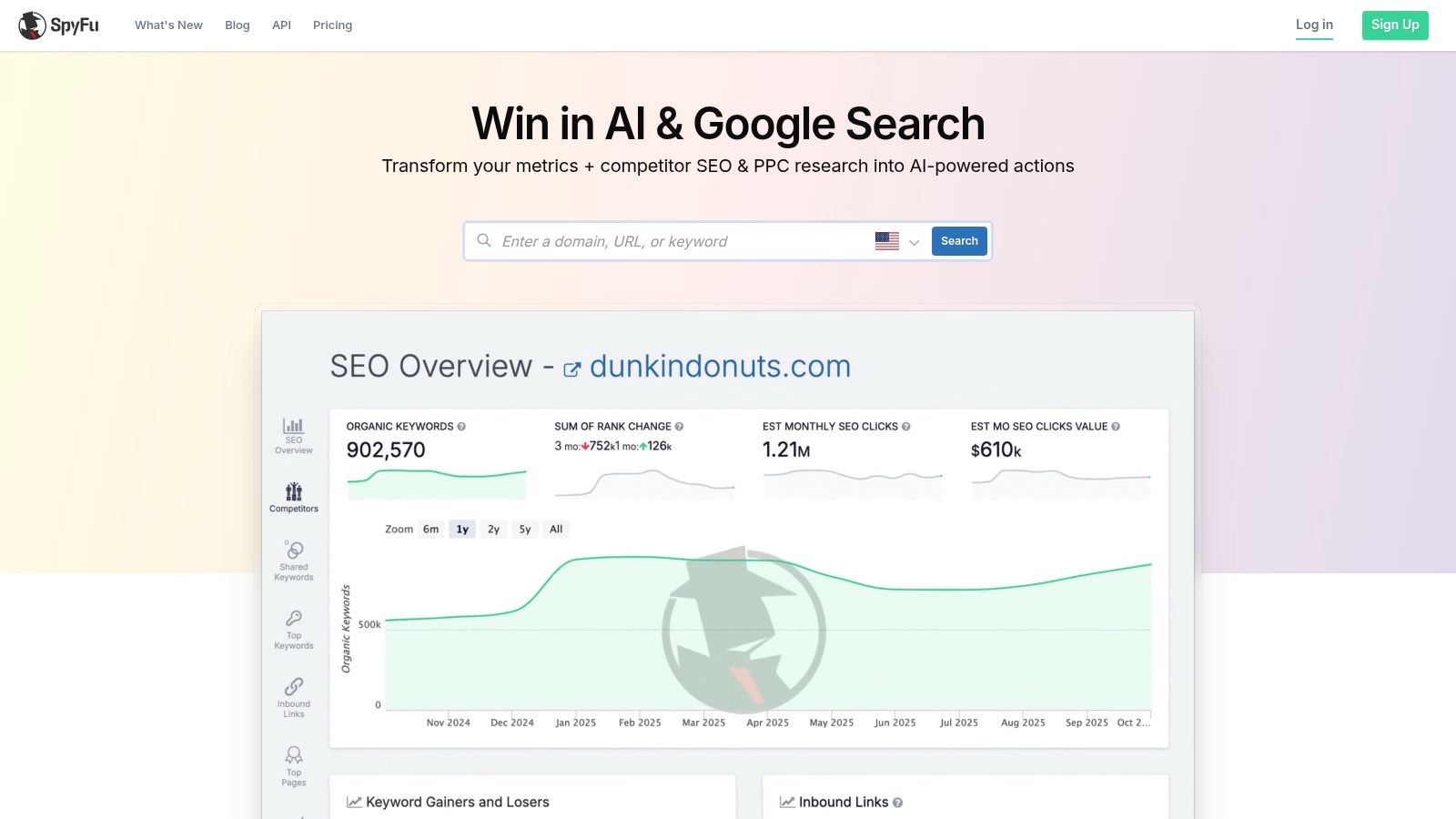
That makes it especially good for planning. When I'm auditing a niche and want to know which keywords competitors are buying, which ad copy they've tested, and what organic overlap exists, SpyFu gets me to the answer quickly. Its Kombat-style overlap work is useful because it makes keyword and ad opportunity mapping feel immediate instead of theoretical.
The price structure is another reason it gets attention. Independent coverage shows SpyFu starting at $9/month in one comparison and around $39/month in another, which still puts it near the budget end of the category backlinko.com. That lower entry point is a real advantage for smaller teams, freelancers, and consultants who want competitor intel without paying for a larger suite they won't fully use.
Here's the trade-off I see most often. SpyFu is excellent for paid search history, competitor monitoring, and fast exports, but it isn't the tool I'd choose if I needed deep non-search traffic visibility. It also won't replace technical SEO tooling. If your work is mostly PPC audits and keyword opportunity hunting, it's strong. If you need a complete SEO and traffic stack, it's better as a specialist than a centerpiece.
Website: SpyFu
7. SISTRIX
SISTRIX is one of the cleanest answers for teams that care about visibility over time. Its long-running Sichtbarkeitsindex is the kind of metric I use when I want a stable view of how a domain is performing in Google, especially across competitors and across markets.
The reason it works is the emphasis on longitudinal tracking. I'm not looking for a flashy estimate that changes every time I refresh the page, I want a steady measure I can compare month to month. SISTRIX is strong here because it focuses on daily recalculations, competitor overlays, SERP feature tracking, and international coverage across many markets.
For practical SEO work, that means I can watch a domain's search presence change and correlate it with content updates, technical fixes, or competitor moves. It's not built for channel-mix reporting, and I wouldn't use it to answer questions about referral traffic or audience behavior. But for organic visibility and market comparison, it's very dependable.
The other thing I like is transparency around pricing and cancellation. That sounds mundane, but in real procurement work it matters. Regional billing in EUR can make comparisons awkward if your finance team is benchmarking against USD-based tools, yet the overall packaging is straightforward enough that smaller teams can still evaluate it without a giant sales process.
Website: SISTRIX
8. Sensor Tower
Sensor Tower belongs in this list because it solves a different class of competitive question. Instead of trying to be a direct SEO replacement, it covers digital intelligence across web, mobile, and ad insights, including Pathmatics for ad visibility and creative benchmarking.
I'd use Sensor Tower when the question is closer to, “How are competitors spending, what creative are they running, and how does that relate to digital demand?” That's useful for enterprise marketers, app teams, and brands with heavy paid media exposure. The platform's strength is not keyword research. It's ad intelligence, audience insights, and category benchmarking at a scale that small SEO tools don't attempt.
This is also one of the clearest examples of how the Similarweb alternatives market has split into multiple jobs. A tool like Sensor Tower serves a broader intelligence use case, while SEO suites serve ranking and content work. If you collapse those jobs into one shopping list, you'll probably buy the wrong thing. If your team is trying to understand ad creatives, impression patterns, or mobile behavior, Sensor Tower makes more sense than another keyword-only platform.
Website: Sensor Tower
9. Comscore
Comscore is the kind of tool I'd bring in when the room cares about audience measurement, deduplicated reach, and market-level planning. It's a panel and census hybrid, so the value is less about SEO mechanics and more about cross-device audience understanding.
That makes it different from an SEO suite. When I need keyword targets or backlink gaps, Comscore isn't the answer. When I need audience reach, demographic context, or planning-grade benchmarking, it can be very useful. For advertisers and agencies, that distinction matters because the output is better suited to media planning than to content strategy.
The biggest practical trade-off is access. Comscore is enterprise-grade, quote-driven, and not self-serve in the way most SEO tools are. That means onboarding and contracts are part of the decision, not an afterthought. If you just need to see which competitor pages are winning search traffic, it's too heavy. If you need audience measurement at scale, it belongs in the conversation.
Website: Comscore
10. Nielsen
Nielsen is another enterprise tool that fits the media intelligence side of the market rather than the SEO side. I'd think of it as a fit for teams that care about ad spend, creatives, and cross-platform content ratings, not keyword gaps or backlink profiles.
The core value here is in Ad Intel und Digital Content Ratings. That combination is useful for large advertisers and agencies that need to understand competitive media activity across channels and compare content reach in a structured way. It's a very different use case from SEO, but that's exactly why it belongs in a comparison like this.
What I've learned from working around these kinds of tools is that teams often ask Nielsen to do a Similarweb job, then get frustrated that it doesn't behave like an SEO suite. It isn't supposed to. It shines when you need broad media planning intelligence, historical ad coverage, and enterprise reporting. It's the wrong choice if your main deliverable is a competitor keyword map.
Website: Nielsen
Top 10 SimilarWeb Alternatives, Feature Comparison
| Product | Core features & USPs ✨ | UX / Quality ★ | Value / Price 💰 | Zielgruppe 👥 |
|---|---|---|---|---|
| SemDash 🏆 | 6.6B keywords; 2.7T backlinks; 600M SERPs; URL‑level mapping; AI Overviews; Keyword & Backlink Gap | ★★★★☆ fast, clean UI; fresh data | 💰 Budget‑friendly; free tier + trial | 👥 SMEs, agencies, consultants, solopreneurs |
| Semrush Traffic & Market Toolkit | Traffic estimates; Market Explorer; channel mix; geo & top‑pages | ★★★★☆ robust integration with SEO data | 💰 Mid‑range; add‑ons raise cost | 👥 Marketing teams, analysts, competitive researchers |
| Ahrefs (Site Explorer) | Site Explorer; top pages; backlinks; SERP history; content gap | ★★★★★ industry‑leading backlink & page‑level accuracy | 💰 Premium; higher tiers for API/reports | 👥 SEO teams, agencies, content strategists |
| SE-Rangliste | Competitive research; rank tracking; site audit; backlink monitor | ★★★★☆ user‑friendly; strong project limits | 💰 Cost‑effective for SMBs & agencies | 👥 SMBs, agencies, freelancers |
| Serpstat | Domain traffic estimates; keyword & backlink tools; batch analysis | ★★★☆☆ powerful for bulk workflows; data‑dense | 💰 Competitive pricing; generous exports on higher tiers | 👥 Agencies needing bulk/domain snapshots |
| SpyFu | PPC competitor history; Kombat overlap; organic + ad timelines | ★★★☆☆ straightforward; export‑focused | 💰 Affordable for PPC/competitive intel | 👥 PPC managers, SMB advertisers |
| SISTRIX | Visibility Index; SERP feature tracking; daily recalcs; mobile/desktop | ★★★★☆ excellent longitudinal visibility tracking | 💰 Mid‑range (EUR pricing) | 👥 Market analysts, SEOs tracking visibility |
| Sensor Tower (inc. Pathmatics) | Ad creatives, spend, impressions; app & digital ad intelligence | ★★★★☆ deep ad & creative intel; enterprise UX | 💰 Enterprise, quote‑based | 👥 Large advertisers, app marketers, media buyers |
| Comscore | MMX deduplicated audience; demographics; Plan Metrix segments | ★★★★☆ authoritative audience measurement | 💰 Enterprise contracts; quote‑based | 👥 Media planners, large publishers, agencies |
| Nielsen | Ad Intel; Digital Content Ratings; cross‑platform reach & demos | ★★★★☆ comprehensive cross‑media metrics | 💰 Enterprise pricing; demo/quote | 👥 Large advertisers, agencies, broadcasters |
My Final Take: How to Choose Your Next Analytics Tool
The right Similarweb alternative depends on what you need to learn. If your goal is broad market sizing, channel mix, or audience benchmarking, enterprise tools like Comscore oder Semrush's Traffic and Market fit that job better than a narrow SEO suite. If your job is to find the exact keywords, pages, and links driving competitor traffic, I'd move toward SemDash oder Ahrefs first, because those tools are built for execution, not just observation.
That distinction matters more than most product pages admit. I've seen teams buy traffic tools when they really needed SEO modeling, and I've seen them buy SEO suites when they really needed market intelligence. The result is usually the same, a stack that's expensive, underused, and full of numbers nobody trusts enough to act on.
For smaller teams, I'd look hard at SE-Rangliste, Serpstat, oder SpyFu depending on the job. SE Ranking gives you a balanced workflow at a lower price point. Serpstat is useful when you need batch analysis and broad coverage. SpyFu makes sense when paid search history and competitor keyword behavior are the priorities.
My own rule is simple. I start with the question, then I pick the measurement model. If I need directional traffic estimates, I'll use that data as a benchmark, not a final answer. If I need a content plan, link targets, or competitor page map, I want a platform with deep SERP and backlink data, and that's where SemDash usually wins for me.
Don't pay for a broader dataset just because it sounds safer. Map your core tasks, run a trial, compare the outputs against your own analytics, and keep the tool that helps you make better decisions fastest. The best platform is the one your team will use this week, not the one with the longest feature list.
If you're replacing Similarweb because you need sharper SEO intelligence, SemDash gives you the keyword, backlink, SERP, and competitor page data to work faster. It's built for the same practical question this guide centers on, what's driving rival traffic and how do you beat it. Take a look at SemDash and see whether it fits your workflow better than a broad traffic estimator.