%20(1)-B86R08ZzwhPzS6UZbG3mSxRWPCwGwn.png)


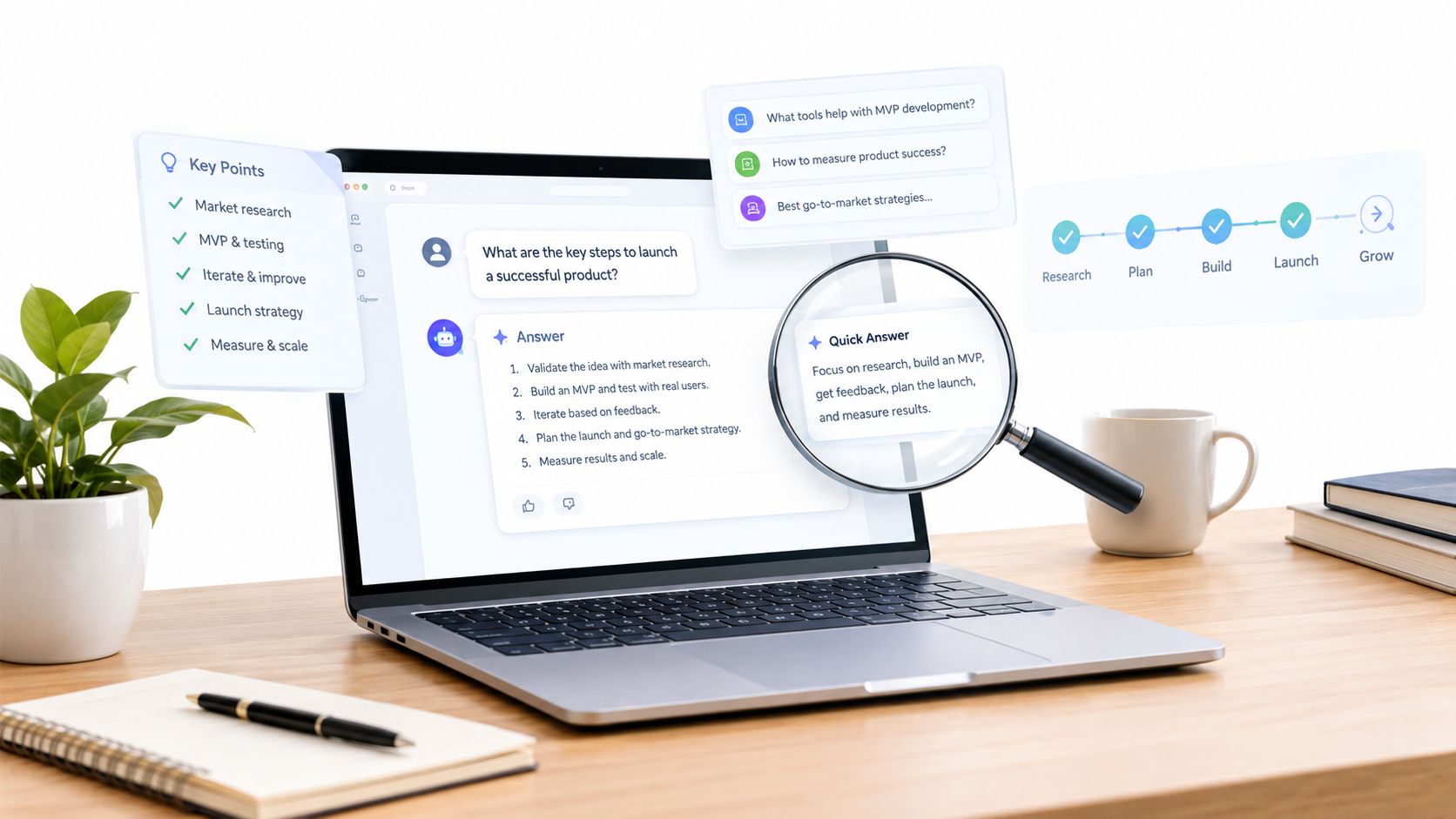
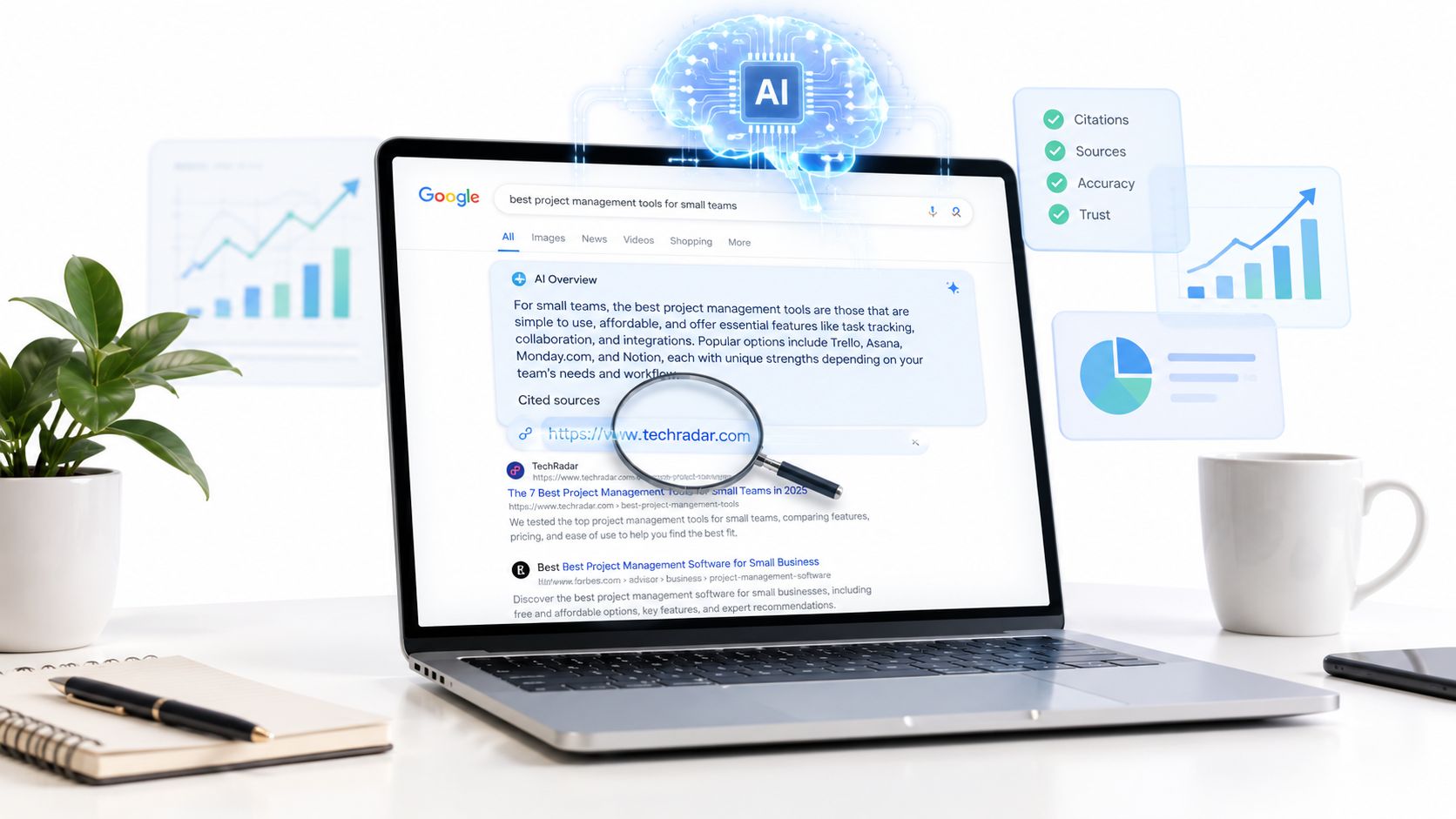
18% of Google searches now trigger an AI summary, but only 1% of those visits result in clicking a cited source link. Answer engine optimization therefore isn't just about earning a citation, it's about being represented accurately and influencing what happens after the search.
You may already be seeing the contradiction in your reports. Rankings are stable or improving, technical issues are under control, and pages still appear for valuable queries. Yet organic sessions aren't moving with them. The explanation often isn't a penalty or a failed content strategy. Searchers increasingly receive a synthesized answer before they decide whether they need to visit a website.
That changes the job. I still care about rankings, crawlability, internal links, and content quality, but I no longer treat a blue-link position as the final measure of search visibility. I want to know whether an answer engine retrieves my page, selects a specific passage, cites the URL, describes the brand correctly, and contributes to a qualified decision.
Inhaltsverzeichnis
- Why Your Rankings Are Rising But Traffic Isn't
- How AI Overviews Changed the Search Landscape
- The AEO Workflow I Actually Use
- Why Structured Data Alone Won't Win You Citations
- Rethinking Success Metrics in the Answer Engine Era
- Tools and Tactics to Monitor and Optimize for AEO
Why Your Rankings Are Rising But Traffic Isn't
A familiar pattern appears in many SEO accounts. A page moves upward for a question such as “how does answer engine optimization work?” The title matches the intent, the page loads cleanly, and the content covers the subject more thoroughly than competing results. The ranking report shows progress, but sessions remain flat.
The missing context is the answer interface. Google can now place a generated response above traditional results, using information retrieved from multiple sources. A searcher may get a definition, a comparison, and a recommendation without opening the page that supplied one of those facts. The page can rank well and still lose the click because the answer has already done enough work.
My own early mistake was treating this as a more competitive version of position zero. I optimized for the page that appeared first, but the contest had moved closer to position zero point five, the source selected and cited inside the generated response. Ranking remained useful because it helped expose the page to retrieval systems, but it stopped being a complete proxy for visibility.
Praktische Regel: A ranking report tells me whether a page entered the candidate pool. Citation tracking tells me whether the page survived selection.
The metric that changed my audits
I now separate three questions during an audit:
- Can the page be retrieved? I check indexability, relevance, internal linking, and whether the page matches the underlying intent.
- Can the answer engine extract a useful passage? I look for a direct answer near the relevant heading, clear entity references, unambiguous dates, and visible evidence.
- Does the citation create qualified discovery? I check whether the brand is represented accurately and whether the mention supports later branded searches, consideration, or conversion activity.
This is why an organic traffic decline doesn't automatically mean the content failed. A page may have become a trusted supporting source in a synthesized answer while receiving fewer direct visits. That outcome still demands measurement, but it should be evaluated differently from a page that has disappeared from retrieval entirely.
For a practical introduction to the mechanics and implications of this shift, I recommend Up North Media's guide to AI answer visibility. It helps frame AEO as a visibility problem that extends beyond conventional rankings.
The operational consequence is straightforward. Keep improving traditional SEO, but add a URL-level question to every important report: which page is being cited, for which prompt, and with what wording? Without that layer, you may celebrate ranking gains that no longer translate into discovery.
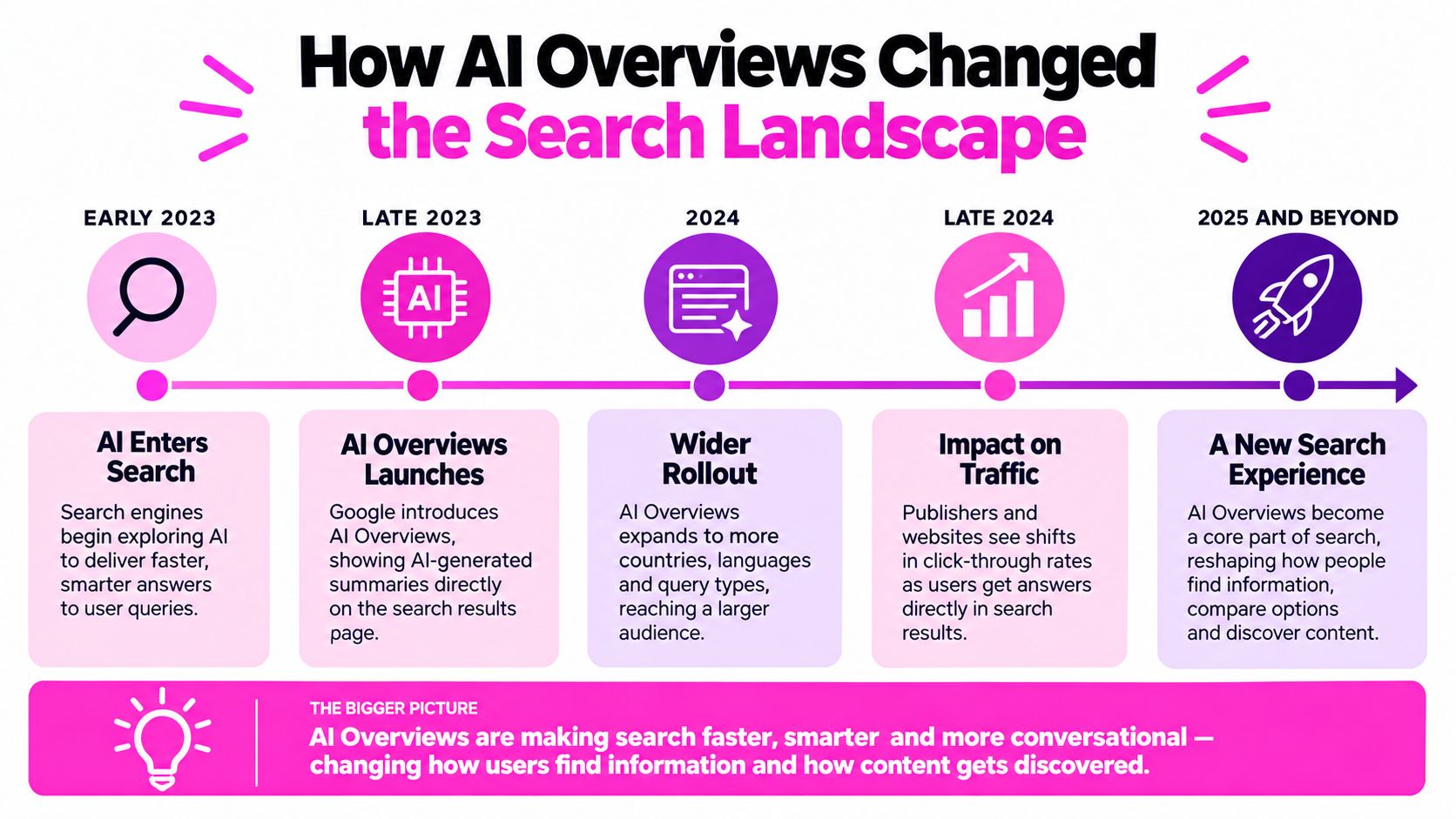
How AI Overviews Changed the Search Landscape
Google introduced its Search Generative Experience as an experimental AI layer for Search on May 10, 2023, then moved the concept into AI Overviews, which launched broadly for users in the United States in May 2024. By late October 2024, AI Overviews had reached more than 100 countries and territories, following expansion into markets including the United Kingdom, India, Japan, Brazil, Indonesia, and Mexico. These milestones are documented in this history of AI Overviews and their rollout.
That progression matters because it marks the point at which search visibility became more than a ranking contest. A conventional result presents a page as a destination. An answer engine retrieves evidence, evaluates its usefulness, synthesizes material from multiple sources, and may attach citations to individual claims. A page therefore has to be both discoverable and extractable.
Why question structure matters
Pew Research Center analyzed browsing data from approximately 2.5 million webpage visits to 1.1 million unique URLs, shared by 900 U.S. adults during March 2025. The analysis found that 58% of respondents encountered at least one query producing an AI-generated summary alongside traditional results, while 65% encountered an AI reference somewhere on a results page. The same research found that 13% visited an AI chatbot website during the month, rising to 20% among adults aged 18 to 29. Pew Research Center's browsing analysis shows why answer-oriented discovery is no longer a theoretical concern.
A separate analysis of 55,393 trending queries found AI Overviews for 13.7% of all searches, verglichen mit 64.9% of question-form queries. Among non-question searches, activation rose from 9.9% for one-word queries mit 38.7% for searches of six or more words, according to the same verified research summary. The practical lesson is not to stuff pages with questions. It's to identify the specific, multi-word problems your audience poses and answer them in a form a retrieval system can use.
Technical eligibility comes first. Google says pages appearing in AI features don't need special AI-only markup or a separate machine-readable file. They still need to be indexed and eligible to display a standard search snippet, as explained in the Google documentation on AI features.
That creates a clear chain of cause and effect:
- Eligibility enables retrieval.
- Clear segmentation makes passages easier to extract.
- Explicit evidence makes those passages safer to cite.
For additional ideas on adapting content and growth programs to generative search, Magnitude Marketing's practical generative search growth tips provide useful strategic context. I also use this technical guide to optimizing for AI Overviews when translating the broader shift into page-level checks.
The AEO Workflow I Actually Use
I start with questions, not with a list of pages that need more words. A page becomes a useful AEO asset only when it answers a real prompt clearly enough for an engine to retrieve and attribute it.
1. Find questions with business intent
I pull question patterns from People Also Ask results, long-tail suggestions, competitor keyword gaps, and existing customer language. SemDash's PAA and Keyword Gap reports are useful inputs here, but the tool is only the starting point. I remove questions that have no commercial or strategic relevance and group the remaining queries by intent.
The most valuable cluster might contain questions about a category, a comparison, a use case, and a limitation. I don't create a separate page for every variation. I decide whether one authoritative URL can answer the cluster without forcing unrelated intents into the same document.
2. Map each query to one URL
Next, I create a simple query-to-URL map. Each priority question gets one primary page, one search intent, and one reason the page deserves to exist. This prevents two common failures: several pages competing for the same question, and an important question being answered only in a vague paragraph on a broader guide.
On the page, I look for four things:
- A direct opening answer: The first relevant passage should resolve the question before adding background.
- Named entities: Products, organizations, concepts, and people should be identified consistently.
- Verifiable context: Dates, definitions, methodology, and supporting references should appear in visible text.
- A complete passage: A copied section should still make sense without requiring the engine to infer missing context from another part of the page.
3. Separate retrieval failure from content failure
I then check whether the URL ranks for the underlying query and whether competing URLs are cited instead. If the page isn't indexed or doesn't rank for a relevant interpretation, I treat that as a retrieval problem. If it ranks but another source earns the citation, I inspect clarity, evidence, structure, and authority before changing the template.
This distinction saves time. Adding FAQ markup to a page blocked from crawling won't solve retrieval. Rewriting a technically eligible page won't solve a missing evidence problem if the page makes broad claims without support.
The GEO-bench study evaluated nine optimization methods across 10,000 queries covering informational, transactional, and navigational intent. Its strongest interventions included explicit sources, quantitative statistics, and relevant quotations, while secondary reporting described experimental visibility improvements of roughly 40% or more. The findings are not a production guarantee, and results vary by engine, domain, query set, and definition of visibility. I use the study as a reason to make claims attributable and extractable, not as a promise of a fixed lift. The GEO-bench findings and their limitations are worth reading before turning experimental results into targets.
4. Monitor the selected URL
Finally, I track which URL gets cited for each query and whether the same page appears across related prompts. A citation from the wrong page can reveal a content architecture problem. A competitor citation can reveal a missing fact, a stronger external authority signal, or a better-structured answer.
The workflow is iterative. I update the page, recheck eligibility, observe citation changes, and compare representation quality rather than judging success from ranking movement alone.
Why Structured Data Alone Won't Win You Citations
Schema markup helps machines interpret a page, but it doesn't make weak content authoritative. Google describes structured data as a standardized way to classify information, such as ingredients and cooking time on a recipe page. Its documentation also makes clear that markup can make a page eligible for a search feature without guaranteeing that Google will display that feature. The same principle applies to answer-engine visibility.
I treat JSON-LD as a machine-readable clarification layer. It can reinforce what the visible page already says about an article, organization, product, or question. It can't repair a page that search engines can't crawl, can't index, or can't understand from its rendered content.
Fix eligibility before adding markup
My technical sequence is deliberately unglamorous:
- Robots directives: Confirm that important content isn't blocked from crawling.
- Canonicalization: Make sure the preferred URL is clear and consistent.
- Rendering: Verify that the main answer appears in the rendered page, not only after a fragile client-side interaction.
- Internal links: Give important question pages a path from relevant, crawlable pages.
- Snippet eligibility: Check that the page can produce a standard search result.
Only after those checks do I review schema. This order matters because a markup-heavy page with weak indexability has no dependable route into the retrieval pool.
Align the markup with the page
The most common implementation mistake is declaring information that users can't see. A team adds FAQ, review, price, author, or product claims to JSON-LD while leaving those details out of the rendered content. That mismatch creates a quality and policy risk, not a shortcut.
I use a simple test: if I removed the JSON-LD, would a user still find the same facts on the page? If the answer is no, I fix the visible page first. I also keep time-sensitive fields current and avoid marking up content that isn't relevant to the page's actual purpose.
At the content level, I use descriptive headings that resemble real questions, then place a self-contained answer directly below the heading. Supporting explanation follows. This structure helps readers scan and gives retrieval systems a clean passage with an obvious relationship between question and answer.
Structured data still has a role, especially when it accurately clarifies entities and page type. But it sits at the end of the implementation sequence. The visible answer, technical accessibility, and evidence come first. A useful reference for aligning those layers is this SemDash guide to structured data for SEO.
Rethinking Success Metrics in the Answer Engine Era
Organic click-through rate is still useful, but it can't carry the entire AEO report. Pew Research Center analyzed 68,879 Google searches from more than 900 U.S. adults during March 2025 and found that 18% produced an AI summary. Traditional-result clicks occurred in 8% of visits when a summary appeared, compared with 15% without one, while clicks on a link inside the summary occurred in only 1% of visits with a summary. The Pew analysis of clicks around AI summaries makes the reporting problem clear.
A cited page can influence a buyer without receiving a direct visit. Conversely, a page can receive traffic while being absent from the answer that shapes the initial decision. I therefore separate visibility from action instead of forcing both into one click metric.
Four outcomes I report separately
Citation inclusion asks whether the URL appears as a cited source for the target question. I record the query, engine, cited URL, and whether the page appears as a primary or supporting source.
Accurate representation asks whether the generated answer describes the brand, product, limitation, and category correctly. A brand mention that contains an outdated feature or incorrect positioning isn't a success just because the logo appears.
Influence on consideration covers the middle of the journey. I compare citation visibility with branded-search changes, direct visits, assisted conversions, and qualitative feedback where available. None of these proves causation alone, but together they provide a more useful signal than ranking movement.
Downstream action is the commercial outcome. I connect cited pages and target prompts with assisted conversions, qualified leads, product evaluation, or another agreed business action. The right event depends on the query's intent.
| Metrik | Traditional SEO | AEO-Focused SEO |
|---|---|---|
| Primary visibility signal | Organic ranking | Citation inclusion and accurate representation |
| Main traffic measure | Organic sessions and CTR | Cited-source visits, branded demand, and assisted activity |
| Optimization unit | Page and keyword | URL, passage, entity, and claim |
| Main failure diagnosis | Ranking or indexability issue | Retrieval, extractability, authority, or representation issue |
| Success interpretation | The user clicks the result | The source is selected, trusted, remembered, and connected to action |
Pew also found that 88% of AI summaries cited at least three sources, so I don't assume a page must dominate the entire answer to matter. A strong result may be a supporting citation that supplies a precise definition, an original comparison, or a fact no other source explains clearly.
That changes how I react to falling organic clicks. I investigate whether the page lost demand, lost rankings, or gained answer visibility while the interface absorbed the visit. The right response might be a content improvement, an authority campaign, or a reporting adjustment, not an immediate rewrite.
Tools and Tactics to Monitor and Optimize for AEO
I use a layered monitoring system because no single report explains why a page is cited. First, I identify the questions and the pages that should answer them. Then I compare ranking visibility, AI Overview presence, cited URLs, competing sources, and external authority signals.
SemDash provides AI Overviews visibility tracking, AI-assisted content briefs, and backlink gap analysis to help SEOs measure citation visibility and identify authoritative external sources. Its AI Overviews view lists triggering keywords, domain mentions, and the exact URLs cited, which lets me inspect whether the intended page is earning visibility or whether another URL is being selected.
Start with the page and query relationship
I use URL-level keyword mapping to answer a practical question: which page currently ranks for the query, and is that the page I want cited? If the wrong page appears, I review internal links, topical overlap, canonical signals, and whether the preferred page contains the strongest answer.
AI intent detection helps classify the query before I build or revise content. A definition page shouldn't try to behave like a product comparison, and a transactional page shouldn't bury its recommendation beneath broad educational material.
Build the external evidence ecosystem
On-site optimization is only part of the work. Answer engines may rely on independent publishers, reviews, directories, documentation, expert references, and comparison pages to validate a brand. I use backlink gap analysis to find relevant sources that already support competitors, then assess whether the opportunity calls for digital PR, an expert contribution, an unlinked-mention request, or a factual correction.
The quality of the source matters more than collecting links indiscriminately. I look for relevance, independence, consistent entity facts, and citation context. If a third-party page describes the company incorrectly, publishing another article on the company domain won't necessarily correct the broader evidence picture.
Review and iterate
My monitoring sheet records the target prompt, current cited URL, preferred URL, representation accuracy, competitor sources, and next action. I revisit priority queries after meaningful content or authority changes, then distinguish a genuine citation gain from a temporary result fluctuation.
The important shift is from optimizing one webpage in isolation to managing distributed discoverability. Your site supplies extractable facts. External sources validate them. Search and answer-engine data show where the evidence is being retrieved. That combination gives you a practical basis for deciding what to update next.
SemDash combines AI Overviews citation tracking with keyword mapping, AI-assisted content briefs, and backlink gap analysis, so you can identify which questions matter, which URLs get cited, and where external authority is missing. Visit SemDash to connect traditional search research with qualified answer-engine discovery.