%20(1)-B86R08ZzwhPzS6UZbG3mSxRWPCwGwn.png)


The most popular advice about finding an alternative to Similarweb is also the least useful: compare traffic estimates and choose the tool with the biggest number. I don't make decisions that way. A modeled visit count can help with directional benchmarking, but it isn't first-party analytics, and it can't explain whether growth came from organic search, paid campaigns, referrals, apps, or audience overlap.
I first define the decision. Am I sizing total-channel traffic, estimating organic demand, reverse-engineering paid search, measuring audience reach, checking historical SERP visibility, or understanding app and web overlap? The right tool changes with the answer. Modern web analytics evolved from server logs that recorded requests without revealing user motivation, and academic research still cautions that metrics such as session duration can't prove active engagement or intent. The underlying measurement limitations are documented in this academic review.
This roundup compares each platform by the job it helps me complete, along with data scope, page-level usefulness, international coverage, freshness, workflow speed, access model, and estimation risk. I also consider whether the output leads to an action, such as a keyword target, backlink prospect, paid-search hypothesis, or content update. SemDash is particularly relevant when my workflow centers on competitor discovery, keyword gaps, backlink opportunities, SERP history, content planning, and AI Overviews visibility.
Inhaltsverzeichnis
- 1. Semrush Traffic Analytics and Market Explorer
- 2. Sensor Tower Web Insights and App and Audience Intelligence
- 3. Comscore Media Metrix and Web and Content Measurement
- 4. Ahrefs Site Explorer and Traffic Estimates
- 5. SE Ranking Website Traffic Checker and Domain Analysis
- 6. SISTRIX
- 7. SpyFu
- 8. Serpstat
- 9. Moz Pro
- 10. Ubersuggest
- Top 10 SimilarWeb Alternatives, Features & Traffic Comparison
- Choose the Dataset That Matches the Decision
1. Semrush Traffic Analytics and Market Explorer
Semrush is the closest like-for-like replacement when I need both market-level traffic benchmarking and a broad SEO and paid-search workflow. Traffic Analytics estimates visits, sources, geography, pages, and device distribution, while Market Explorer helps frame a category, compare competitors, inspect audience overlap, and identify relative growth positions.
I use it when the question is, “How large is this competitive set, and which channels appear to support it?” The answer is more useful when I can move directly from a market view into competitor keywords, advertising activity, content, and PR research without exporting everything into separate tools. That breadth is Semrush's main advantage.
Praktische Regel: Treat traffic and market-share figures as directional indexes, then use keyword, page, and ad evidence to explain the direction.
The trade-off is access. The full traffic modules may sit in higher tiers or require add-ons, so a team buying Semrush mainly for SEO may find the total cost and workspace complexity difficult to justify. Estimates can also diverge for small or niche domains, where modeled panels have less observable activity. I compare Semrush and Similarweb in more detail here.
Am besten geeignet für: agencies, growth teams, and market researchers that need SEO, PPC, content, and category analysis in one environment. If I only need organic page and keyword decisions, Semrush's broader market layer may be more than I need. Semrush's Traffic Analytics and Market Explorer make the strongest case when market sizing matters as much as SEO execution.
2. Sensor Tower Web Insights and App and Audience Intelligence
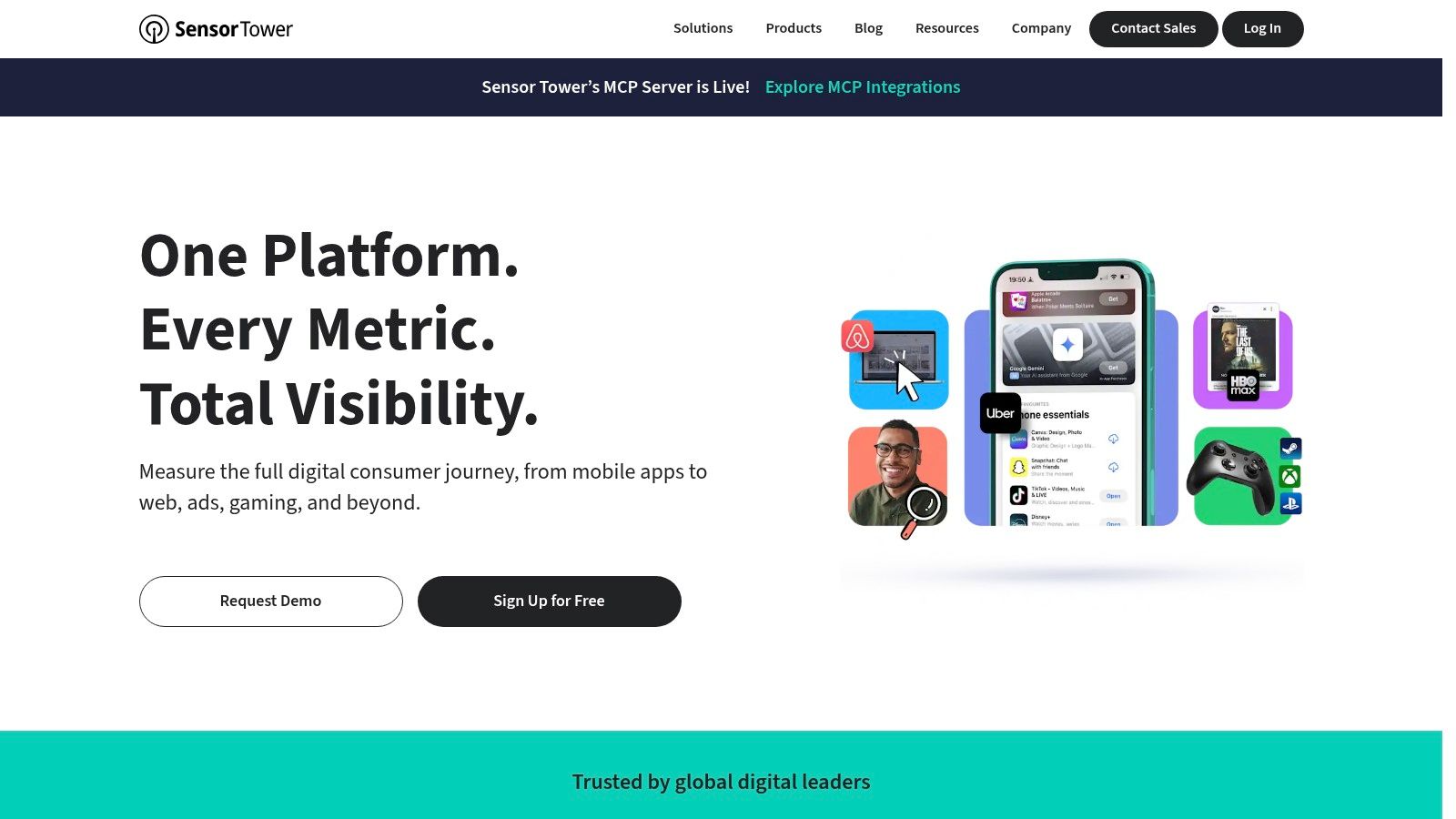
Sensor Tower becomes the more sensible Similarweb alternative for app-centric businesses. Its value isn't just website traffic. The platform connects web intelligence with app performance, advertising, audience research, and cross-platform behavior, giving me a way to investigate whether a competitor's digital presence is primarily web-led, app-led, or distributed across both.
For an app publisher, marketplace, subscription service, or mobile-first consumer brand, I want to answer questions such as: Which competitors are gaining attention through apps? How does web engagement relate to app usage? Are audience groups duplicated across properties? Sensor Tower's True Audience concept is designed to provide a deduplicated view across app and web, which is more useful than adding separate audience estimates together.
The limitation is implementation friction. Sensor Tower is enterprise-oriented, sales-led, and doesn't publish a simple public price list. Some web capabilities are also newer than its established mobile and app intelligence, so I'd test the exact countries, categories, and domains that matter before committing.
Am besten geeignet für: app companies, mobile acquisition teams, and enterprise researchers studying cross-platform audiences. It isn't my first choice for page-level SEO reverse-engineering, where ranking URLs, keyword gaps, and backlinks provide a more direct route to action. Sensor Tower's Web Insights and audience products fit a different decision from an SEO-only Similarweb replacement.
3. Comscore Media Metrix and Web and Content Measurement
Comscore is the choice I'd make when the brief requires audience measurement for media planning, not a competitor's estimated traffic. Its platform is built around cross-platform consumption, demographic profiles, deduplicated reach and frequency, and measurement that can support publisher, agency, and advertiser decisions.
That distinction matters in a media-buying workflow. A brand planning a campaign may need to compare audience reach, understand demographic composition, or activate segments through Proximic. Those questions aren't answered well by a list of ranking keywords. Comscore's desktop, mobile, and connected-TV coverage is relevant when the audience exists across several environments and a media team needs a common measurement framework.
I wouldn't buy Comscore expecting a self-serve SEO research experience. Contracts are enterprise and sales-led, and its reports are less granular for questions such as “Which page ranks for this query?” or “Which domains link to this competitor but not us?” The methodology and audience focus are strengths for media planning, but they create a mismatch for content teams.
When the decision concerns reach and demographics, use an audience-measurement product. When it concerns discoverability, inspect search evidence directly.
Am besten geeignet für: publishers, agencies, advertisers, and brands that need a media currency or cross-platform audience view. Comscore's measurement platform is a credible alternative to Similarweb for audience planning, but not a substitute for an SEO crawler.
4. Ahrefs Site Explorer and Traffic Estimates
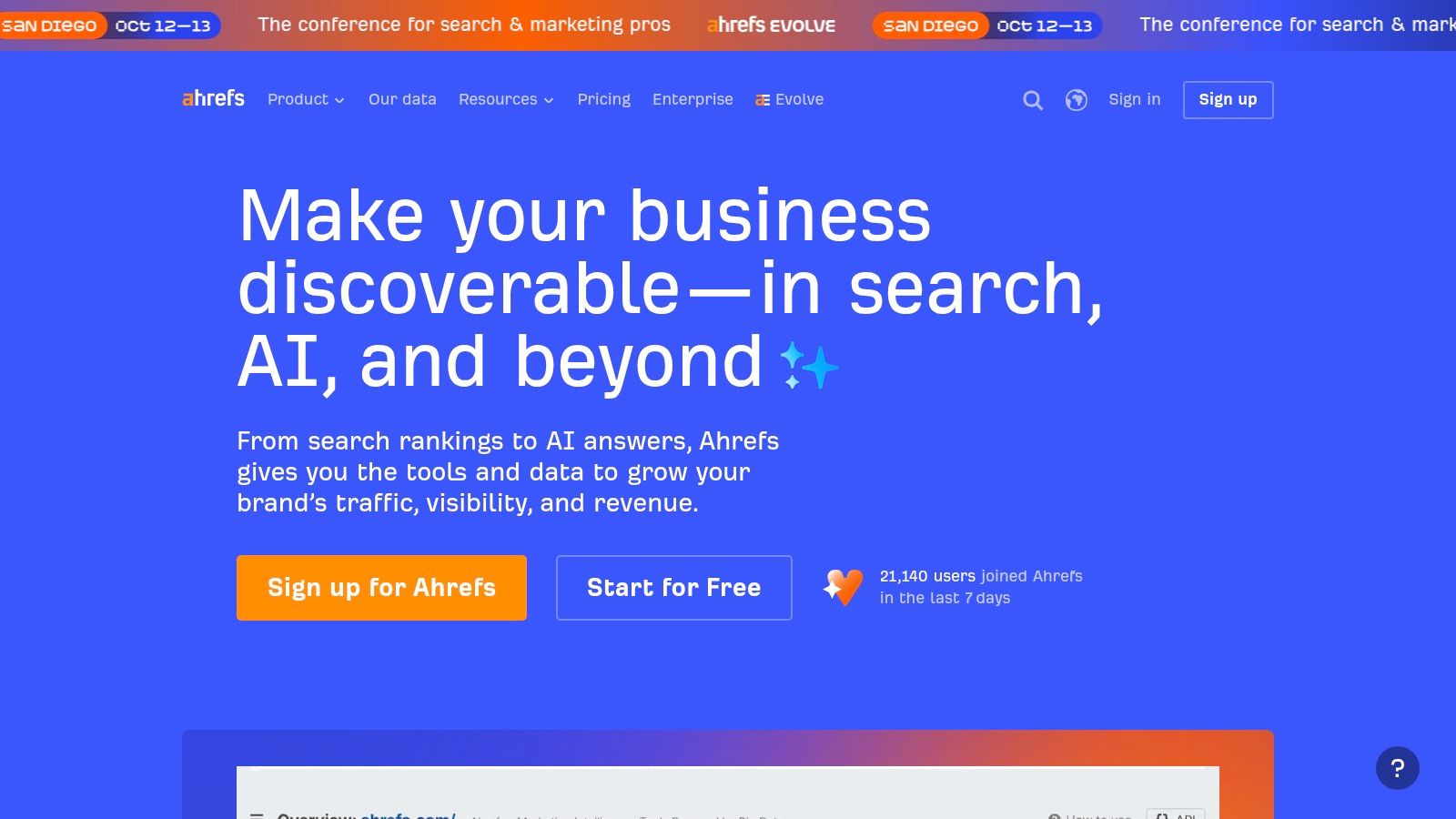
Ahrefs is my preferred option when “traffic” really means organic search reach. Site Explorer shows estimated organic and paid keyword traffic, top pages, competing content, backlinks, and a traffic value metric that frames organic demand against an equivalent PPC cost.
The page-level view changes the workflow. Instead of stopping at a competitor's domain estimate, I can inspect the URLs earning visibility, identify the queries attached to each page, review the referring domains, and decide whether to build a better page, improve an existing one, or pursue links from the same sources. That makes Ahrefs particularly strong for organic reverse-engineering.
The trade-off is scope. Ahrefs isn't trying to provide the same all-channel audience picture as Similarweb. Referral, social, direct, app, and broader audience signals are not the center of the workflow. Its estimates are also modeled, so I use them for comparative direction rather than presenting them as audited visits.
An independent benchmark compared third-party estimates with first-party Google Analytics across 641 websites and 7,692 site-month observations. It reported the strongest correlation for Semrush at 0.790, followed by Datos at 0.720, Similarweb at 0.659, and Ahrefs at 0.504, with Ahrefs measured on organic-search traffic rather than total visits. The SparkToro benchmark explains why correlation and trend fidelity matter more than headline counts.
Am besten geeignet für: SEO specialists, content teams, and link builders. My comparison of Similarweb and Ahrefs covers the practical difference between all-channel estimation and search-led analysis. Ahrefs Site Explorer fits when the next action must happen at keyword, URL, or backlink level.
5. SE Ranking Website Traffic Checker and Domain Analysis
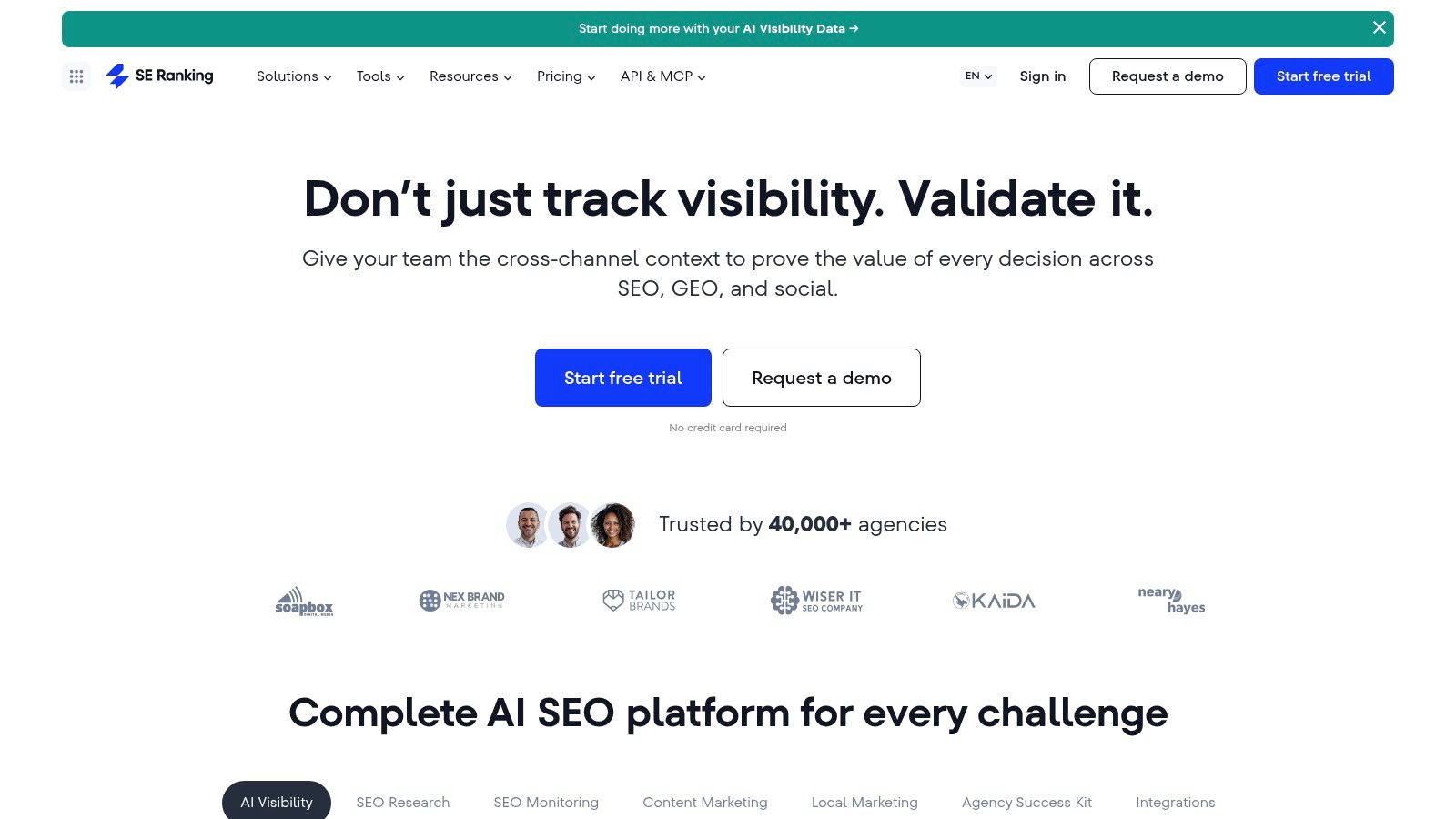
SE Ranking works well for teams that need directional competitor traffic data without adopting a heavyweight enterprise workflow. Its Website Traffic Checker provides estimated traffic and trends, while domain analysis, rank tracking, keyword research, backlinks, and reporting keep the rest of the SEO process in the same interface.
I'd use it for a client discovery sprint where I need to compare several domains, identify visible competitors, and turn the findings into rank-tracking projects. The interface is approachable, which matters when an agency has account managers or content strategists who won't spend their day inside a specialist data product. API access for traffic and domain research is also useful when recurring reports need structured inputs.
I wouldn't use it as the sole authority for a very small site or an unusual market. Long-tail coverage can be thinner than the largest crawlers in some regions, and modeled estimates become less stable when a domain has little visible search or referral activity. I also separate the tool's estimated traffic trend from verified conversions in Google Analytics.
Am besten geeignet für: SMBs and agencies that want an accessible all-in-one SEO workflow with traffic endpoints. SE Ranking's Website Traffic Checker and domain tools are a practical fit when price, usability, and API access carry more weight than maximum market-intelligence depth.
6. SISTRIX
SISTRIX helps answer a narrower and often more valuable question: How has a domain's organic visibility changed over time, and which competitors gained or lost share in the same SERPs? Its Visibility Index, historical SERP tracking, international databases, Content Planner, and reporting tools make it particularly useful for SEO teams working across European markets.
I reach for SISTRIX when a traffic estimate would hide the cause of a change. A visibility decline can lead me to ranking URLs, affected keyword groups, SERP movements, and competitor gains. That gives me a diagnostic path instead of a single unexplained traffic line. It's also useful for separating a sitewide visibility shift from a problem concentrated in one content type or market.
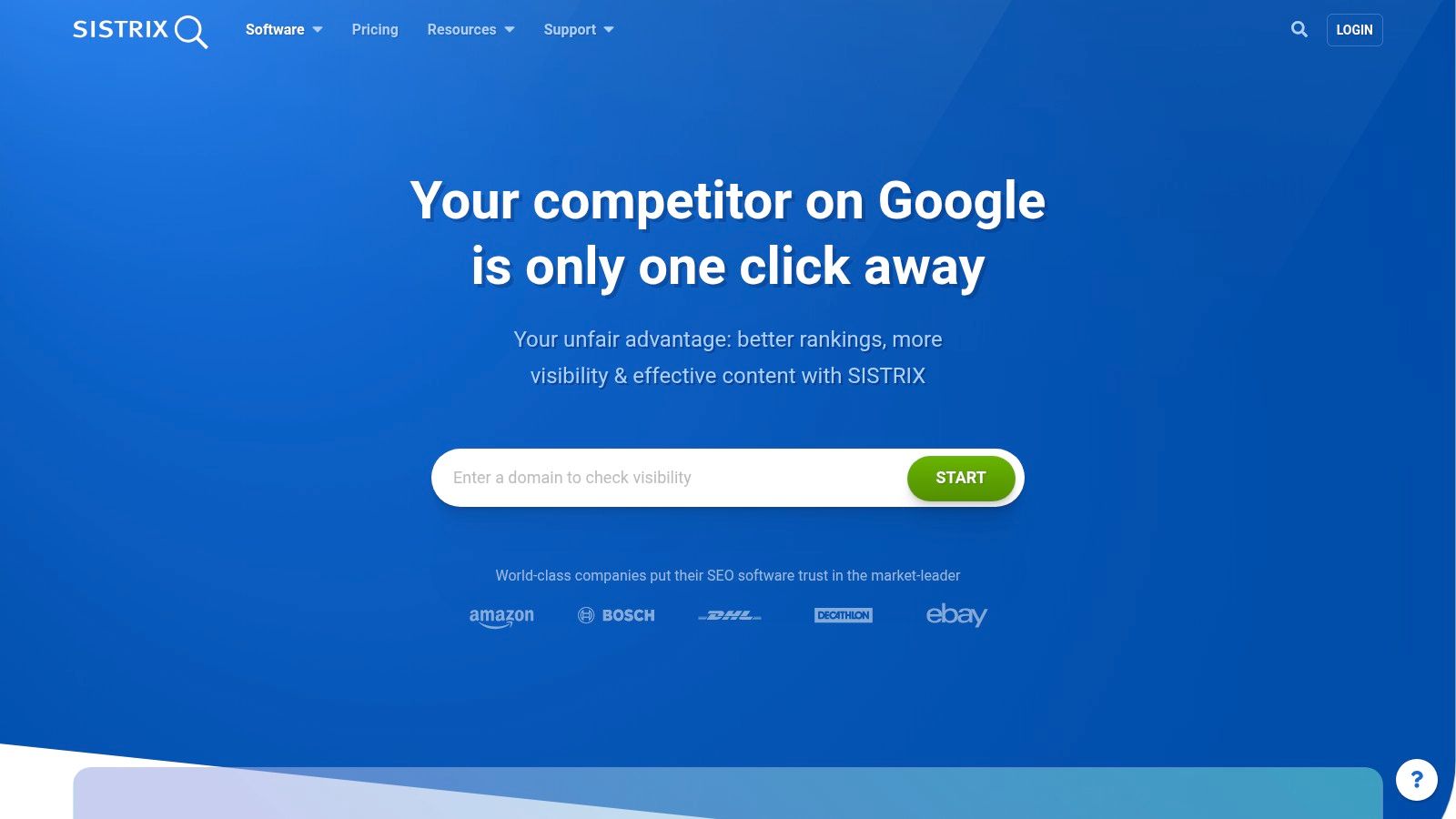
SISTRIX is not a broad replacement for audience measurement. It focuses primarily on SEO visibility rather than modeling every traffic channel, and its modular structure means some capabilities depend on the selected plan. That focus is a benefit when the team wants historical search evidence, but a limitation when the brief asks for demographic reach or app behavior.
My selection test: If the report must explain a SERP movement, choose historical visibility data before a generalized traffic estimate.
Am besten geeignet für: European SEO teams, consultants, and marketers monitoring share of voice across countries. SISTRIX is strongest when historical organic performance is the decision, not total digital audience size.
7. SpyFu
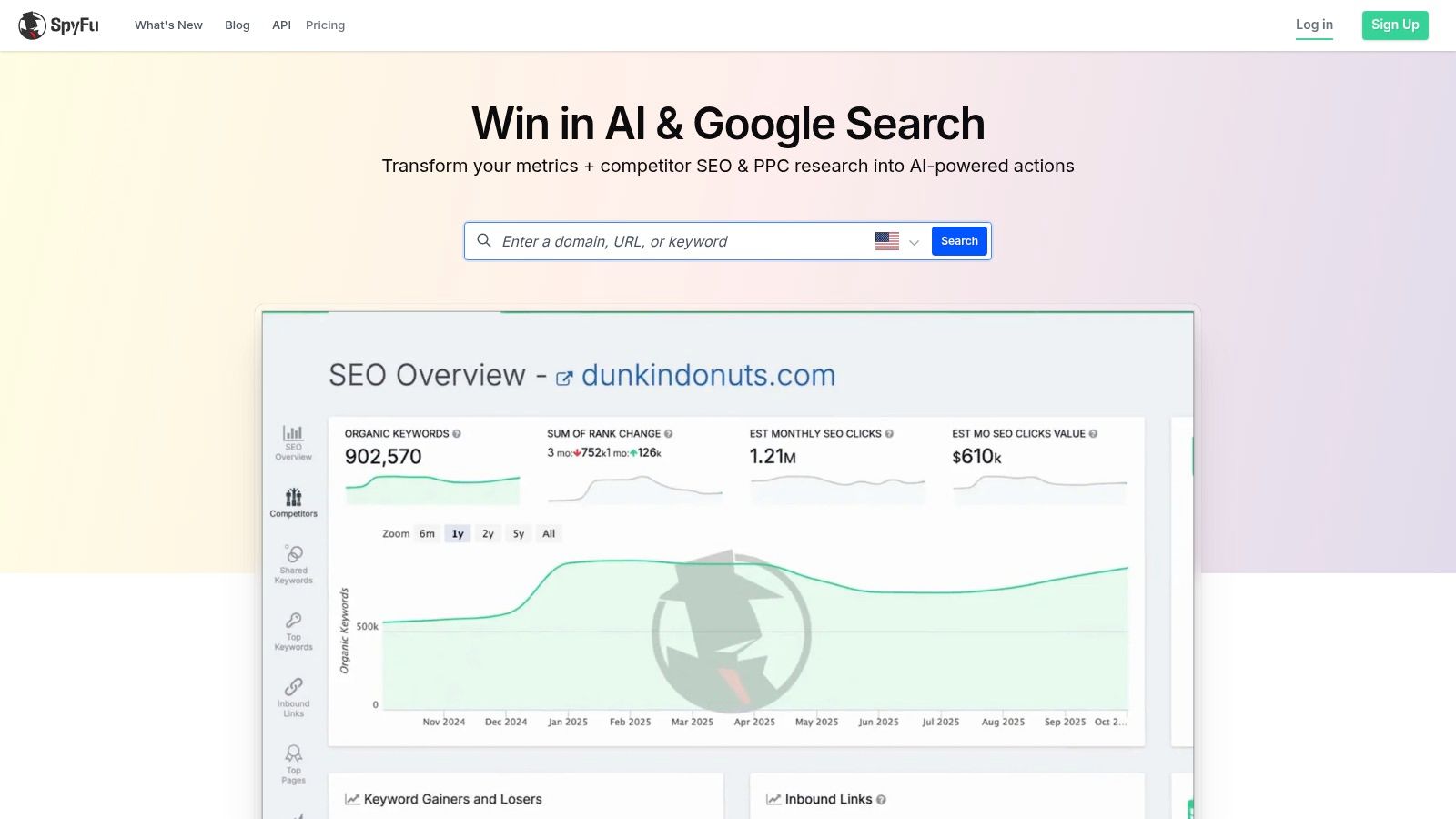
SpyFu earns its place when the decision is paid-search reconnaissance. I use it to examine competitor PPC keywords, ad history, estimated clicks and costs, and overlap between domains. The historical ad view is especially useful for spotting messaging that competitors have kept in market, tested repeatedly, or aligned with specific commercial queries.
A practical workflow starts with a competitor domain, not a generic keyword list. I look for paid terms, inspect the associated ad copy, compare landing-page themes, and then check whether the same competitor also ranks organically. That combination can reveal where a company treats search as a paid-only acquisition channel and where it has invested in durable organic coverage.
The estimates need discipline. Low-volume and B2B queries can produce noisy click or cost assumptions, and SpyFu doesn't provide the broader audience, app, or referral intelligence I'd expect from a full digital-market platform. I treat its ad history as a source of hypotheses, then verify current ads and landing pages before recommending budget changes.
Am besten geeignet für: PPC managers, demand-generation teams, and SEO practitioners who want to understand the relationship between paid and organic coverage. SpyFu is a focused alternative to Similarweb for paid-search research, not a replacement for all-channel analytics.
8. Serpstat
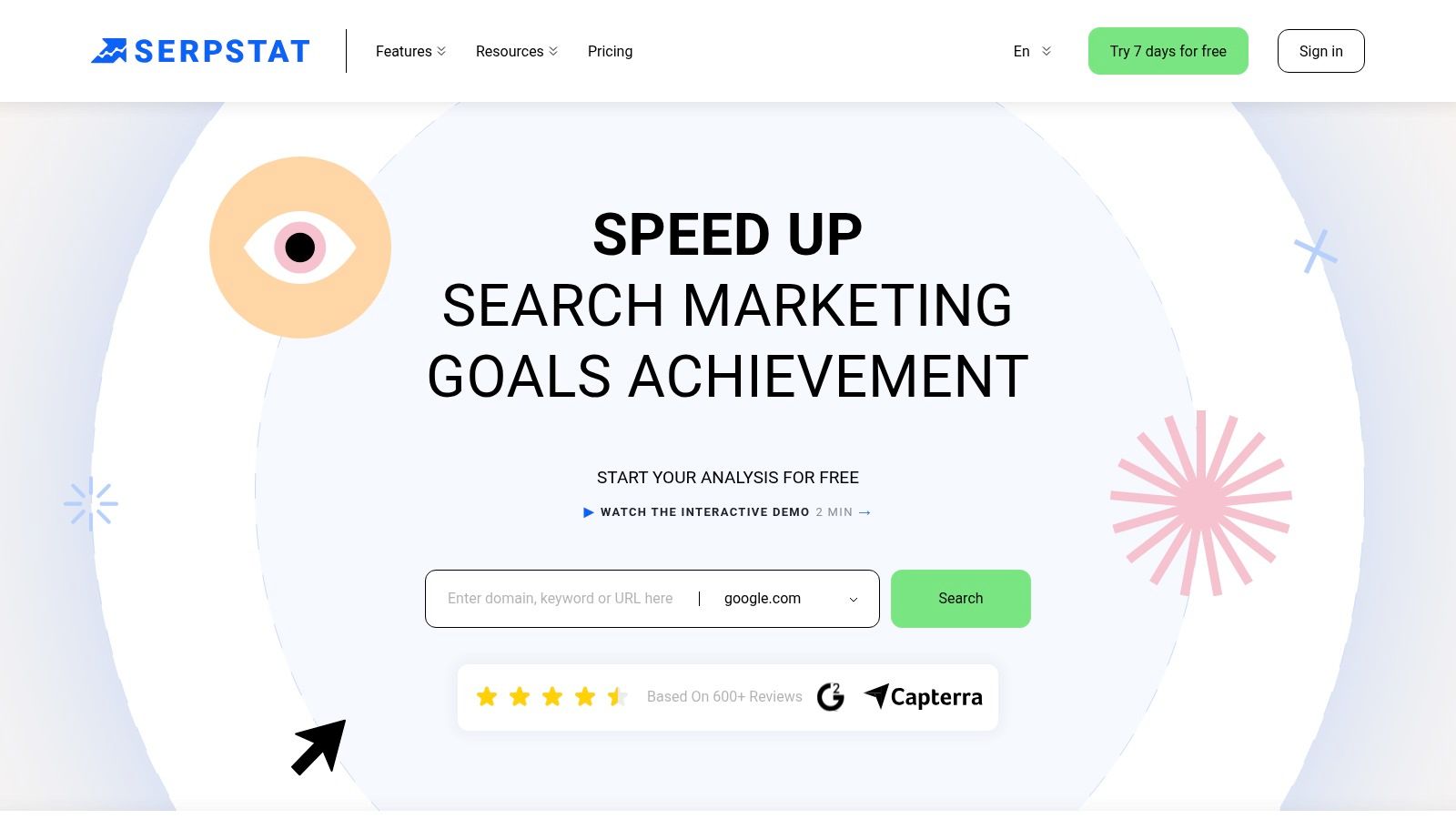
Serpstat is useful when I need broad SEO coverage on a controlled budget. Its domain and URL analysis, visibility indicators, keyword research, clustering, backlink analysis, rank tracking, and site audit give a small team enough surface area to investigate competitors without assembling several specialist products.
I find the clustering workflow valuable during content planning. Rather than treating every related query as a separate article, I can group terms into page-level topics, compare competitor coverage, and decide where one authoritative page should replace several overlapping drafts. Domain and keyword-gap reports then provide a route from competitive observation to a prioritized editorial backlog.
The compromises show up in polish and freshness. The interface and data updates may feel less refined than top-tier competitors, and the traffic indicators are primarily SEO-based rather than a complete view of direct, referral, social, app, and paid activity. I also avoid making a market-sizing decision from its estimated traffic alone.
Am besten geeignet für: freelancers, SMBs, and agencies that need keyword, competitor, backlink, and rank-tracking coverage in one affordable workspace. Serpstat makes more sense as an SEO-led Similarweb alternative than as a general audience-measurement platform.
9. Moz Pro
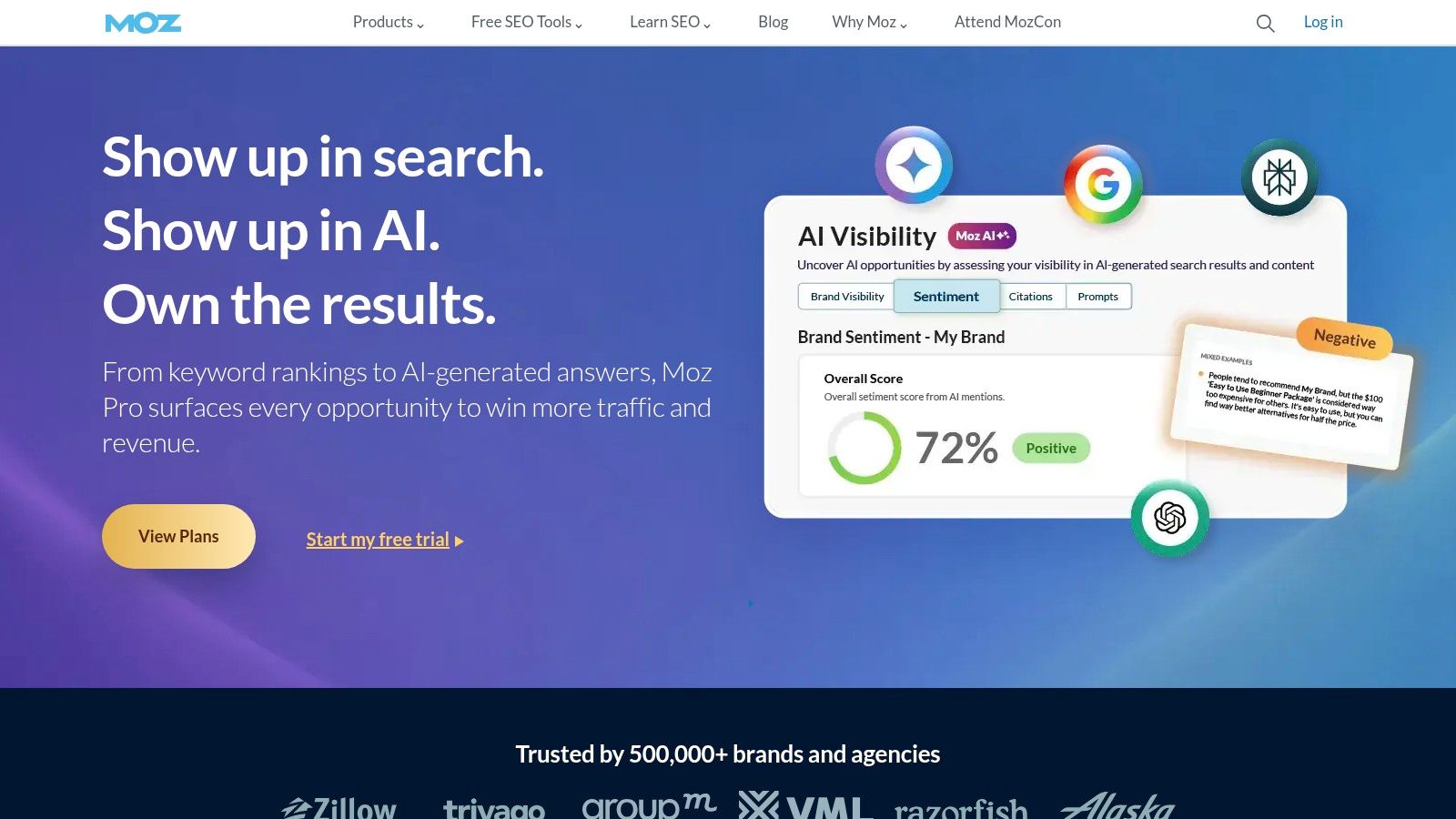
Moz Pro is a steady choice for organic visibility comparison and link opportunity discovery, particularly when the users need a clean interface and established educational resources. Domain Overview, Domain Authority and Page Authority, Keyword Explorer, SERP analysis, Link Explorer, and rank tracking cover the core decisions an SMB SEO team makes each week.
I use link intersection and domain comparisons to find sites that support competitors but not my client. Then I review the actual linking pages and context before treating a domain as an outreach prospect. Domain Authority can help organize a large prospect list, but I never let a proprietary score replace relevance, editorial quality, or the page's ability to send qualified visitors.
Moz Pro isn't a traffic estimator in the Similarweb sense. It won't give me the same all-channel source mix or audience-overlap view, and its data depth can trail Ahrefs or Semrush for some competitive research tasks. That limitation is acceptable when the brief is organic visibility, links, and SERP opportunities rather than market reach.
Am besten geeignet für: SMB teams, consultants, and marketers who value usability and a structured SEO learning path. Moz Pro is a credible SEO alternative to Similarweb, but I'd pair it with first-party analytics for actual performance measurement.
10. Ubersuggest
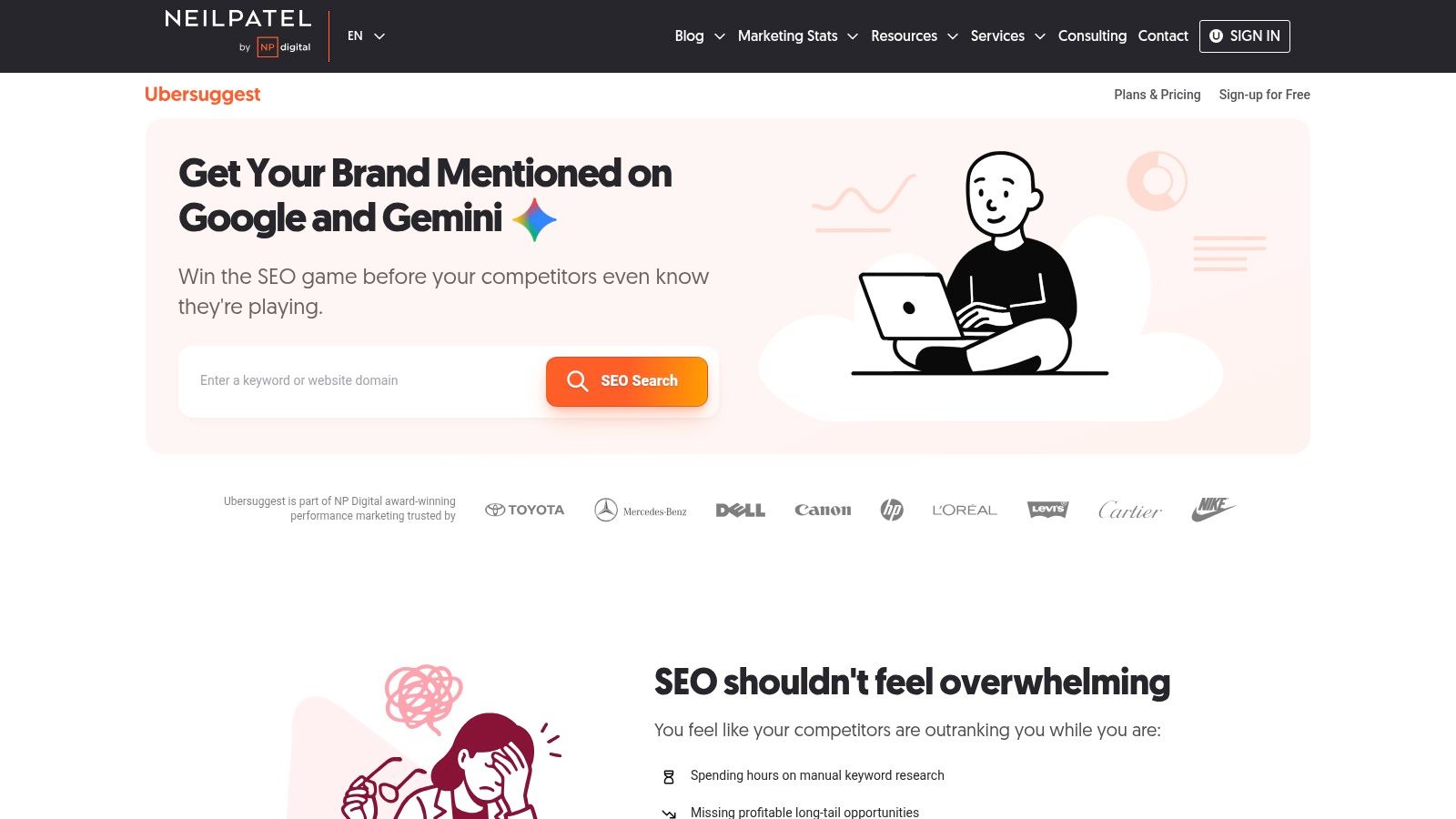
Ubersuggest is the simplest option on this list for quick, directional competitor research. I can enter a domain, review competitor keywords, inspect content ideas, check basic backlinks, explore similar websites, and form an initial traffic hypothesis without introducing a complicated workflow.
That simplicity helps when a freelancer or small business needs a fast starting point. For example, I might use it to identify a competitor's visible topics, collect a first set of content ideas, and decide whether a deeper analysis is worth the time. The site audit and basic backlink data can support early prioritization before the team invests in a more advanced tool.
The limitations become obvious at scale. Data depth and accuracy are lower than the leading SEO suites, and daily or project limits can interrupt a large competitor study. Traffic estimates are directional, so I wouldn't use them to approve a budget, forecast revenue, or claim that one competitor has a precise market share.
Am besten geeignet für: freelancers, bloggers, and small businesses that want basic SEO intelligence and a low-friction workflow. Ubersuggest can serve as an inexpensive Similarweb alternative for initial discovery, provided I verify important findings elsewhere.
Top 10 SimilarWeb Alternatives, Features & Traffic Comparison
| Product | ✨ Key features / 🏆 Strength | 👥 Target audience | ★ Data quality/coverage | 💰 Price/value |
|---|---|---|---|---|
| Semrush (Traffic Analytics + Market Explorer) | ✨ Traffic Analytics, Market Explorer, keywords & ads, API, 🏆 strong all-in-one market view | 👥 Agencies & marketing teams | ★★★★☆ | 💰💰💰 (mid‑high, modules/add‑ons) |
| Sensor Tower (Web Insights + App/Audience Intelligence) | ✨ Cross‑platform web+app, True Audience dedupe, ad & audience intelligence, 🏆 app depth | 👥 App‑centric enterprises & mobile marketers | ★★★★☆ | 💰💰💰💰 (enterprise) |
| Comscore (Media Metrix) | ✨ Audited cross‑platform reach, demographics, deduped panels, 🏆 currency for media/ads | 👥 Publishers, brands, media buyers | ★★★★★ | 💰💰💰💰 (enterprise/currency) |
| Ahrefs (Site Explorer + Traffic) | ✨ Massive backlink index, Site Explorer, top pages, traffic value, 🏆 backlink & SERP insights | 👥 SEO teams & content-led agencies | ★★★★★ | 💰💰💰 (mid) |
| SE Ranking (Website Traffic Checker) | ✨ Estimated traffic, rank tracking, domain/backlink analysis, API | 👥 SMBs & small agencies | ★★★☆☆ | 💰💰 (budget‑friendly) |
| SISTRIX | ✨ Visibility Index, long SERP history, strong EU coverage, 🏆 EU market depth | 👥 EU‑focused SEOs & agencies | ★★★★☆ | 💰💰💰 (modular pricing) |
| SpyFu | ✨ PPC competitor history, Kombat overlap, cost/traffic estimates | 👥 PPC specialists & budget agencies | ★★★☆☆ | 💰💰 (lower cost) |
| Serpstat | ✨ Keyword clustering, visibility, backlink tools, audits | 👥 SMBs & growth teams on a budget | ★★★☆☆ | 💰💰 (budget) |
| Moz Pro | ✨ DA/PA metrics, Keyword Explorer, Link Explorer, education resources | 👥 SMBs, in‑house SEOs & learners | ★★★★☆ | 💰💰💰 (mid) |
| Ubersuggest | ✨ Competitor keywords, content ideas, basic audits, simple workflow | 👥 Freelancers, solo marketers & small SMBs | ★★☆☆☆ | 💰 (very affordable) |
Choose the Dataset That Matches the Decision
I don't choose one universal winner. I choose the platform whose evidence answers the decision without pretending to measure something it can't observe.
Für total-channel market benchmarking, Semrush is the most natural fit in this group because Traffic Analytics and Market Explorer connect estimated traffic with category, audience, SEO, and paid-search context. Sensor Tower is better when app behavior and deduplicated app-and-web audiences matter. Comscore fits a more formal media-planning environment where cross-platform reach, demographics, and frequency matter more than page-level search data.
Für organic reverse-engineering, Ahrefs, Semrush, SemDash, SISTRIX, SE Ranking, Serpstat, Moz Pro, and Ubersuggest all answer parts of the question, but they don't offer identical depth or coverage. I want the exact ranking URL, the query behind it, the SERP context, and the backlinks supporting that page. A domain-level traffic estimate alone can't tell me what to publish or which link opportunity to pursue.
A PLOS ONE comparison found that Similarweb over-reported traffic relative to NetMonitor and fell within ±30% of NetMonitor for only 49% of 487 websites. The academic comparison outlines why methodology, sampling, coverage, and reproducibility belong in vendor evaluation. I therefore use modeled traffic for descriptive benchmarking, not as a substitute for first-party analytics, experiment measurement, attribution, or an investment forecast.
My selection process is straightforward:
- Define the question: Write down whether the decision concerns traffic channels, organic demand, paid search, audience reach, SERP history, or app and web overlap.
- Run the same domains through shortlisted tools: Record differences in geography, device scope, channel definitions, historical coverage, and update timing.
- Verify the evidence: Open the ranking pages, inspect the keywords, check the SERPs, review referring domains, and confirm whether the claimed traffic source is plausible.
- Separate measurement from diagnosis: Use Google Analytics and other first-party systems to measure owned performance. Use SEO platforms to decide which pages, queries, links, and content themes deserve action.
- Choose the actionable output: Prefer the tool that produces a defensible next step, not the one with the most impressive dashboard.
Global coverage also deserves explicit testing. The International Telecommunication Union estimated that approximately 6.0 billion people, or 74% of the world's population, used the Internet in 2025, während 2.2 billion remained offline. The ITU data shows why country, language, device mix, and market maturity must be part of any international comparison. A tool that performs well in one mature market may not provide equivalent evidence in a mobile-first or less represented region.
I position SemDash as the practical choice when I need to consolidate competitor domains, top pages, traffic share, keyword gaps, backlink gaps, historical SERPs, content briefs, clustering, and AI Overviews citations in one SEO workspace. Its keyword database contains 6.6 billion keywords, its backlink index contains 2.7 trillion links, and its SERP Checker provides 12 months of history, all documented in the SemDash platform overview. Those capabilities answer a different question from audience measurement: which queries and pages create discoverability, and what should my team do next?
AI Overviews require their own reporting layer. A Pew Research Center study of browsing behavior from 900 U.S. adults found that users clicked a traditional search result on 8% of visits when an AI summary appeared, verglichen mit 15% when no summary appeared, while links inside the summary received clicks on 1% of visits. The Pew Research findings support separating AI Overview appearance, citation, and click-through outcomes. I don't collapse those outcomes into one visibility score, because being cited, ranking in the blue links, and receiving a visit are different events.
Teams researching adjacent marketing data may also need specialist resources such as LinkedIn analytics tools, but the same principle applies. Match the dataset to the decision, document what the estimate includes, and verify the underlying evidence before turning a dashboard number into a business conclusion.
SemDash brings keyword, backlink, SERP, competitor-page, traffic-share, content-planning, clustering, and AI Overviews research into one workspace for SEO-led competitive analysis. Visit SemDash to compare competitor domains, find the pages and queries behind their visibility, and turn those findings into your next content and link-building actions.