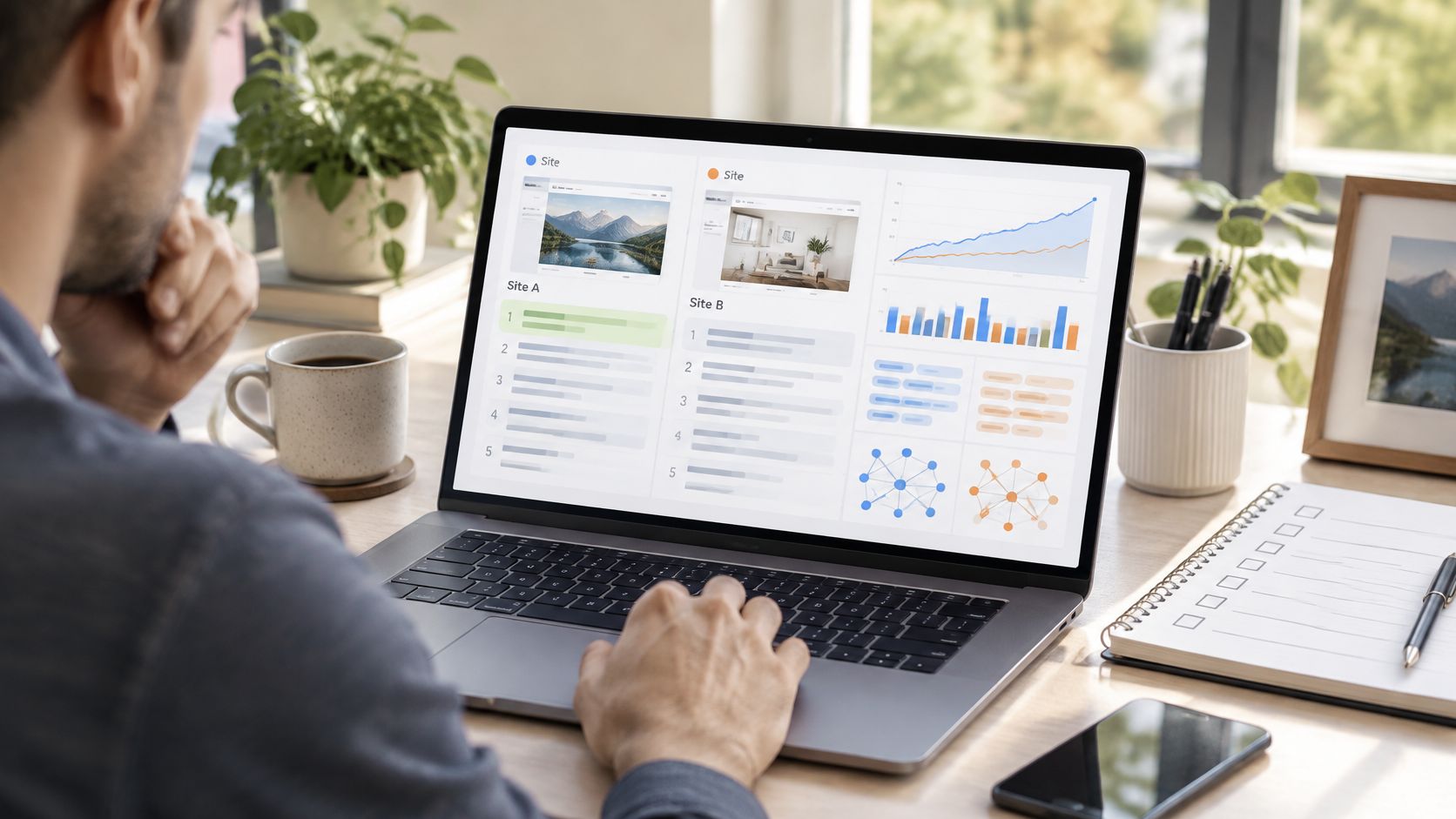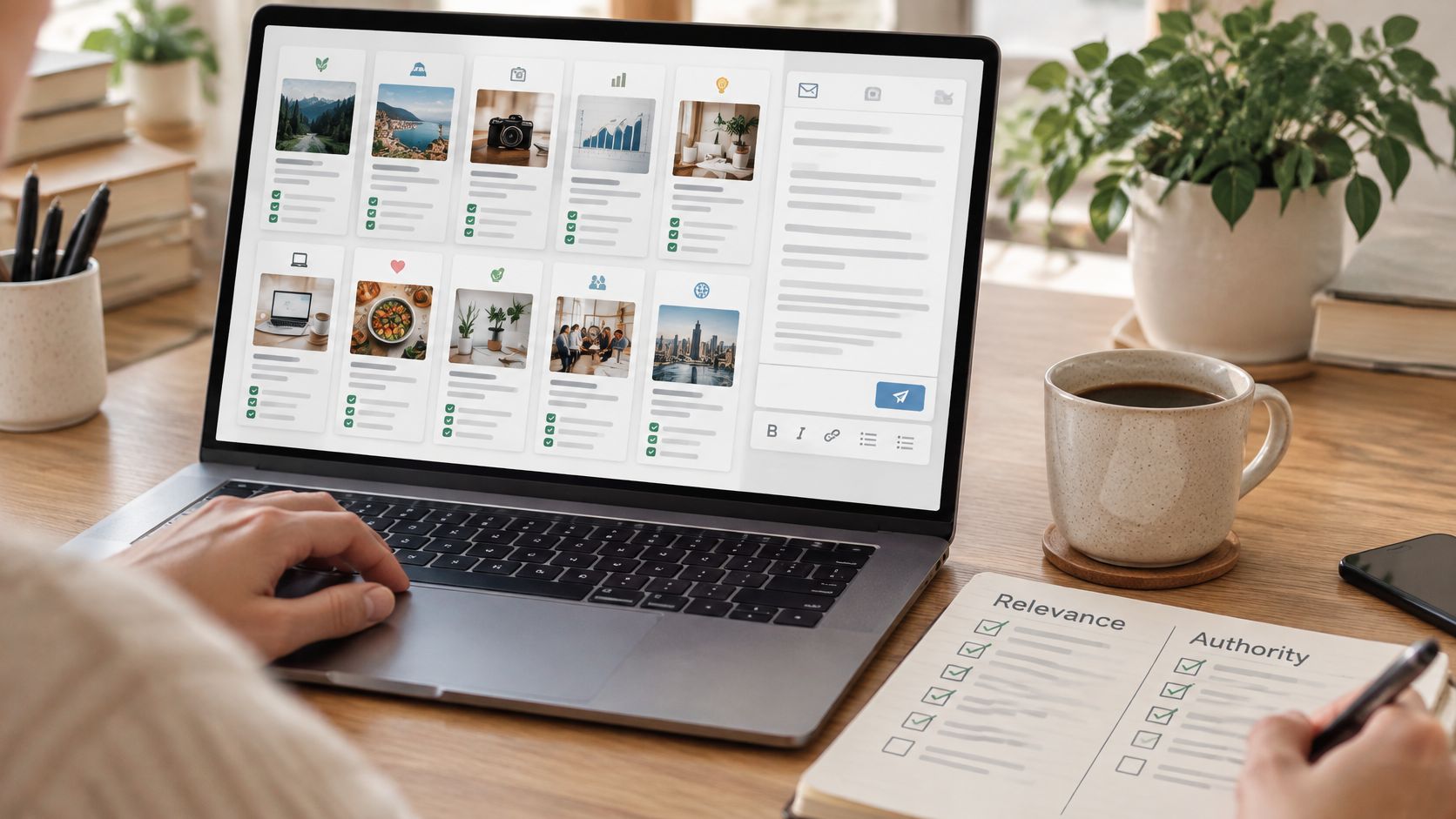
You've got writers hitting green scores, and traffic still isn't moving. I've seen that pattern more than any other. We buy a content optimizer to fix drafts, then discover our real bottleneck was earlier. We picked the wrong topic, targeted a query we couldn't win, or never checked which competitor pages and links were holding the top spots.
That's why I judge Surfer SEO alternatives on whether they help me decide what to write, not only how to score what I've already written. Some tools below are research suites. They tell me which keywords drive competitor traffic, which URLs rank, and where the link gaps sit. Others are in-editor optimizers. They improve a draft, but they won't tell me if the draft deserves to exist.
The stakes aren't small. BrightEdge's benchmark puts organic search at 53.3% of trackable web traffic, so choosing the wrong queries wastes real acquisition potential. I want you to read this list by job, not logo. If your team argues about topics every Monday, start with the suites. If your writers need scoring help today, start with the editors.
My rule: I never let a score approve a topic. I approve the topic from SERP, competitor, and demand evidence first, then I let a score check coverage.
Inhaltsverzeichnis
- 1. SemDash
- 2. Ahrefs
- 3. Semrush
- 4. SE Ranking
- 5. Serpstat
- 6. SpyFu
- 7. Moz Pro
- 8. Frase
- 9. Content Harmony
- 10. seoClarity
- Surfer SEO alternatives at a glance
- Choose the Tool That Fits Your Workflow, Not the Logo
1. SemDash
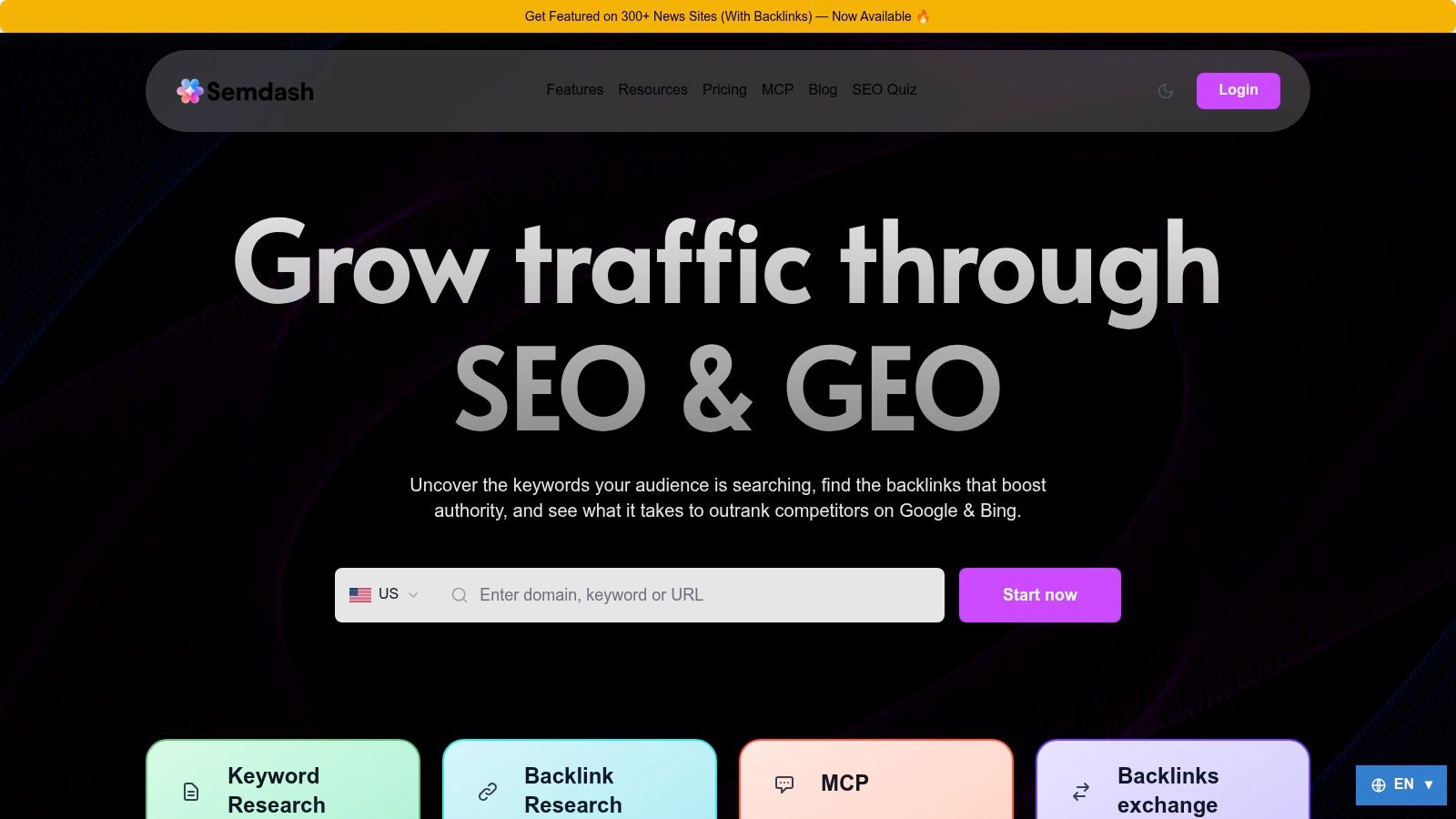
When the content team has drafts but no clear target, SemDash helps answer the earlier question: which topic and page deserve attention? It is a research workspace for comparing competitor domains, ranking keywords, and the exact URLs ranking for those terms. That page-level view helps shape a brief around what currently appears in search results, rather than relying on a draft score alone.
SemDash draws on a 6.6-billion-keyword database, einer 2.7-trillion-link index, und 600 Millionen SERPs, die monatlich aktualisiert werden. Its SERP Checker also provides 12 months of SERP history for reviewing changes over time. Keyword Gap and Domain Keywords surface terms competitors rank for that your site may be missing. Keyword clustering groups related queries into page-level topics, while AI-assisted briefs use live SERP data to guide content planning.
Where It Earns Its Place
- AI Overviews tracking: See which keywords trigger mentions of a domain in Google AI Overviews, along with the exact URLs cited, including competitors' pages.
- Backlink-Lücke: Find domains that link to competitors but not your site. SemDash also supports unlinked brand-mention detection and broken-backlink recovery.
- Traffic Share and Top Pages: Compare organic traffic leaders for seed keywords and review the pages driving competitor performance.
Google says AI Overviews expanded to more than 200 countries and territories and over 40 languages in its May 2025 update on AI Overviews. For content planning, citation visibility adds a separate check alongside traditional rankings: a page may rank without being cited in an AI-generated answer.
The trade-off is focus. SemDash covers keyword, backlink, competitor, and SERP research, but it is not a score-first editor like Surfer. Users can get started for free, and free live calls with an SEO specialist can help them assess the workflow. Check current plans before shortlisting. SemDash does not guarantee rankings or traffic gains, so judge it by whether its research helps your team choose better targets and briefs.
2. Ahrefs
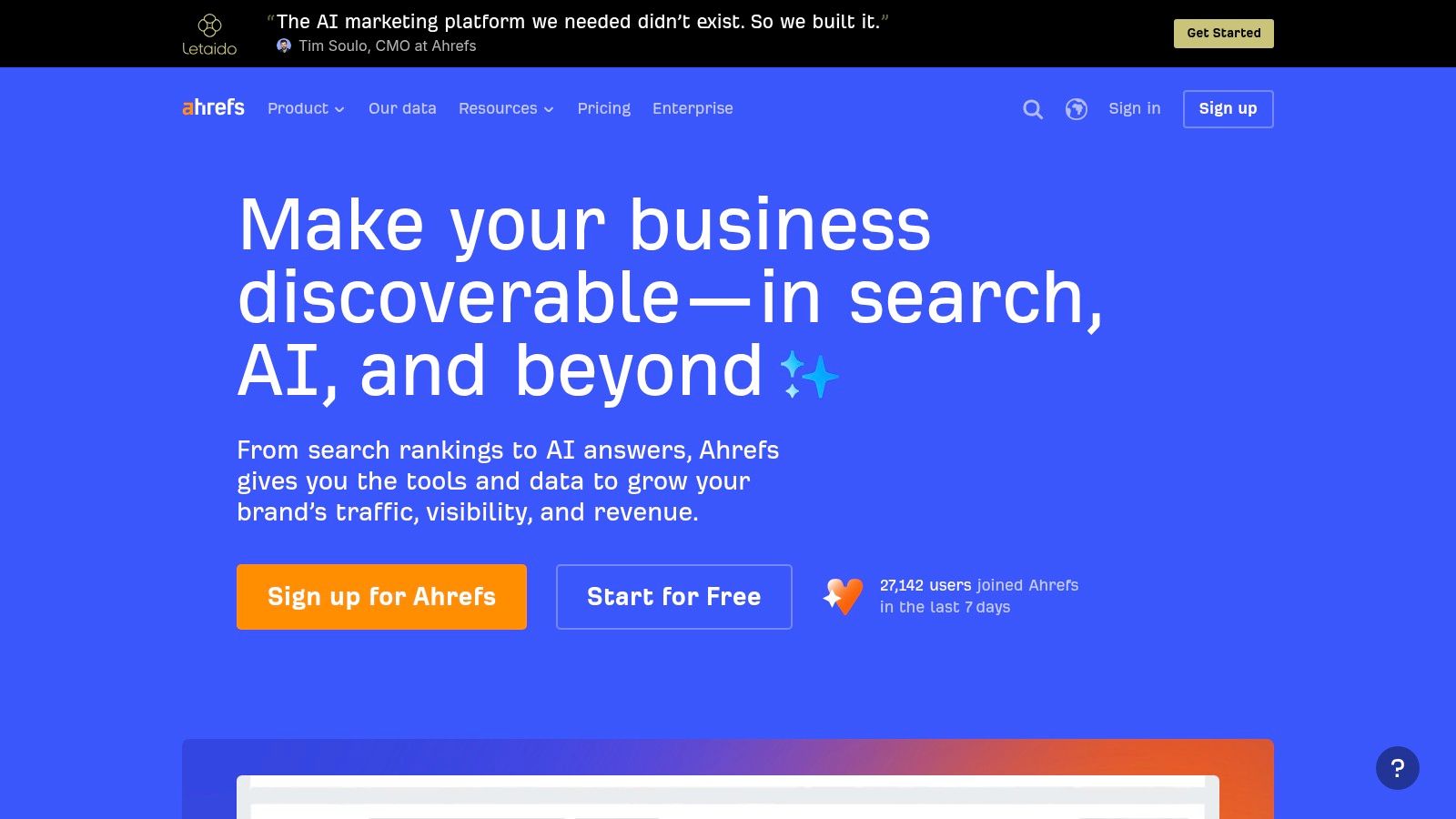
A competitor's pages can show what to write before you open a content editor. Ahrefs brings that research into Site Explorer, where you can review a domain's top pages, ranking keywords, and referring domains. Keywords Explorer checks search demand, while Content Explorer helps find topics that already attract links and traffic.
For link prospecting, filter a competitor's top pages to remove branded terms, then examine pages with traffic and relatively few links. Check why each referring domain linked, such as original research, a tool, or a resource page. That context makes outreach more relevant. Google's spam policies on link building also make clear that links created primarily to manipulate rankings can count as link spam; paid links should use rel="nofollow" oder rel="sponsored".
Ahrefs is a research suite, not a draft-scoring tool. It helps assess whether a topic has demand, competitors, and link opportunities. For a direct comparison of its research workflow with Surfer's content optimization, see this Surfer SEO vs. Ahrefs comparison.
Ahrefs has a free account for verified site owners and entry-level paid plans with usage limits. Those limits can constrain frequent research. The price may make sense when backlink and competitor analysis guide your content decisions; for drafting help alone, Ahrefs is a poor fit.
3. Semrush
When a content team needs topic research, rank tracking, and draft optimization in one place, Semrush offers a broad SEO suite. Keyword and competitor research, backlink analysis, and site audits sit alongside position tracking. Higher tiers add content optimization, and the platform also covers paid search. That breadth helps teams working across channels, but it can mean paying for tools a content-only team rarely uses.
A 2025 survey of 123 SEO professionals reported usage of 85% for Ahrefs, 71% for Semrush, and 15% for Surfer. The figures suggest research suites are more widely used than dedicated content editors. For choosing a Surfer alternative, the practical question is whether you need Semrush's research and tracking tools, or mainly want guidance while writing.
Semrush's main trade-off is complexity. The wide interface can slow down new users who only need a few reports. Set up saved views for keyword gaps, position tracking, and site audits early, so routine research does not become a tour of the whole suite.
- Am besten geeignet für: Teams coordinating SEO, content, and paid search in one platform.
- Watch out: Reporting and tracking limits may require a higher tier as your needs grow.
Semrush's paid tiers climb steeply from Pro to Business, so the suite makes more sense when you use its wider modules. Check current pricing before you commit. If your main need is a Surfer-style editor, Semrush may be more tool than you need.
4. SE Ranking
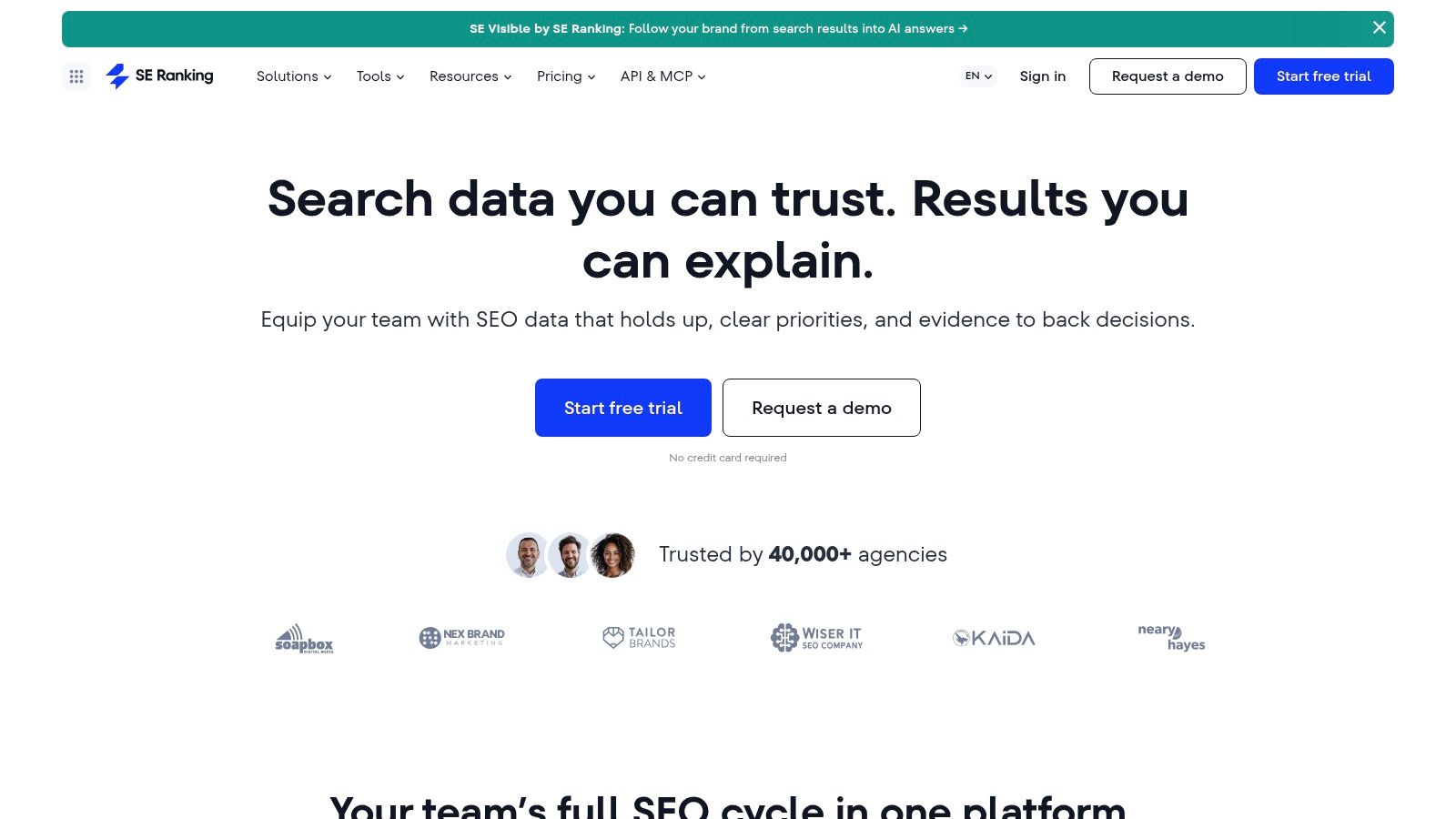
What I like about SE-Rangliste is that it publishes its limits. Projects, keywords, and crawl allowances are stated up front, so I can price it against real volume before I trial. Too many suites hide the ceiling until you're mid-migration. Here, I know what I'm buying.
The coverage is broad for the tier. I get keyword and competitive research, rank tracking with share-of-voice measurement, backlink research and monitoring, and site audits. Current plans also include local and AI-visibility features. For an agency juggling several clients, share of voice is the report clients understand most readily. I show movement there before I show individual positions.
Rank tracking without share of voice tells you where you sit. It doesn't tell you whether you're winning the market you're in.
There's a 14-day trial, but no permanent free plan, so I plan my test queries before I start the clock. I run one client domain, one competitor set, and one audit in week one. If those three jobs don't hold up, I don't wait for week two.
My caveats are cost-related. Add-ons for agency features or API access raise the total beyond the headline plan. Add those before you compare prices with rivals. It's also less of a Surfer-style drafting tool than Frase. I buy it for tracking and research discipline. I wouldn't buy it mainly to score articles.
5. Serpstat
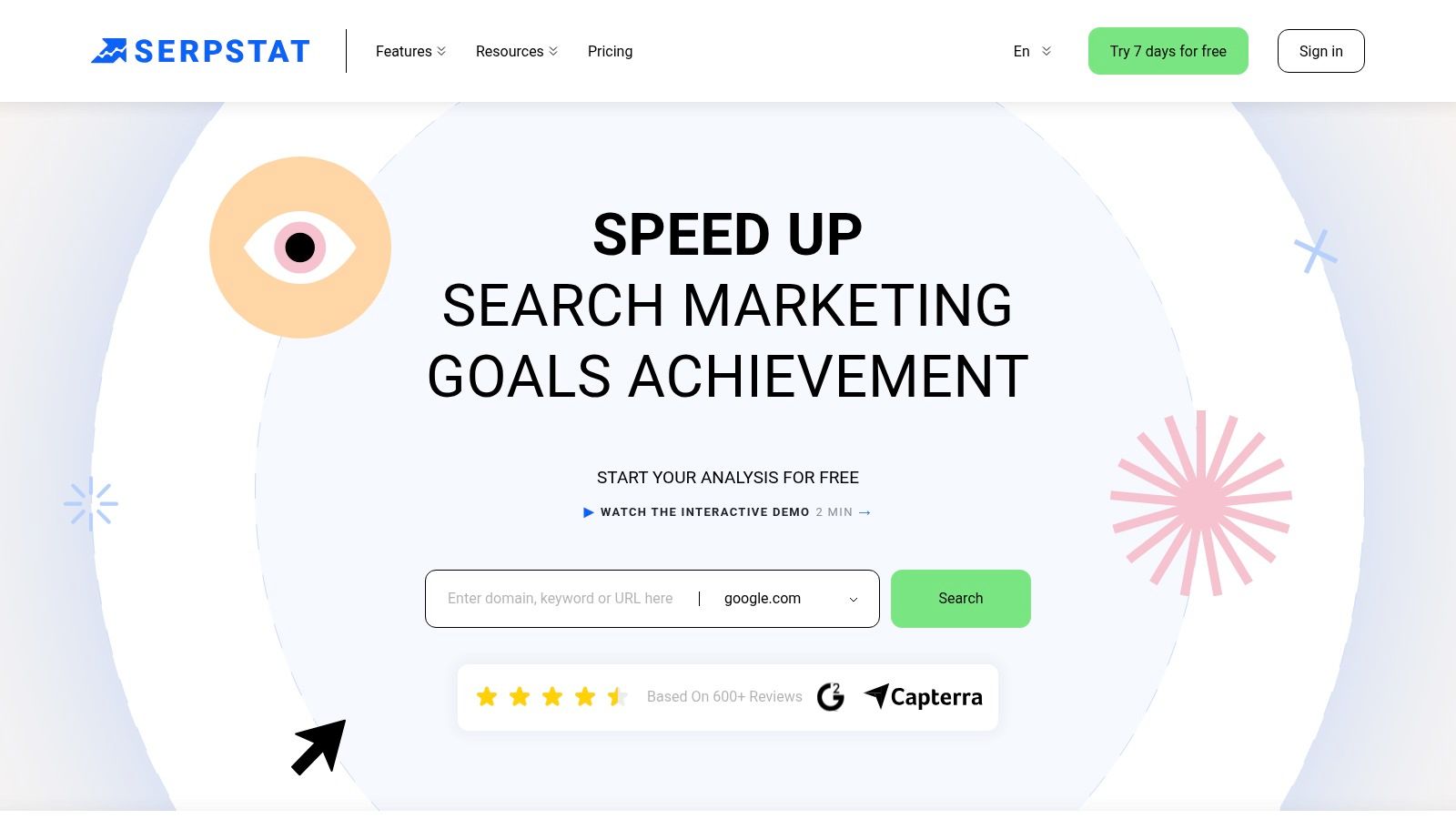
Serpstat suits teams that need keyword and site research, backlink analysis, rank tracking, and audits in one platform. Regional Google databases support research across different markets. Its AI Overviews keyword tracking adds visibility data, while historical rankings help distinguish a short-term dip from a pattern worth investigating.
For content decisions, ranking history is more useful than a single position. Compare movement with content updates and seasonal demand, then check whether multiple URLs trade places for the same topic. That can point to cannibalization and help determine whether to refresh, consolidate, or leave a page as it is. Google Search Console's Performance report documentation describes a 16-month data history for comparison.
Plan Shape
Serpstat's plans cap daily searches, exports, and audit pages. Compare those limits with your monthly keyword research and audit workload before choosing a tier. Higher tiers add API access, scheduled reports, and team sharing, which can matter for agency workflows.
For a small site, the agency tiers may be more than you need. For a lean team, Serpstat brings research, tracking, and audits together, but its feature set is stronger for deciding what to investigate than for guiding a draft inside the editor. It is a research suite, not a substitute for Surfer's in-editor content scoring.
6. SpyFu
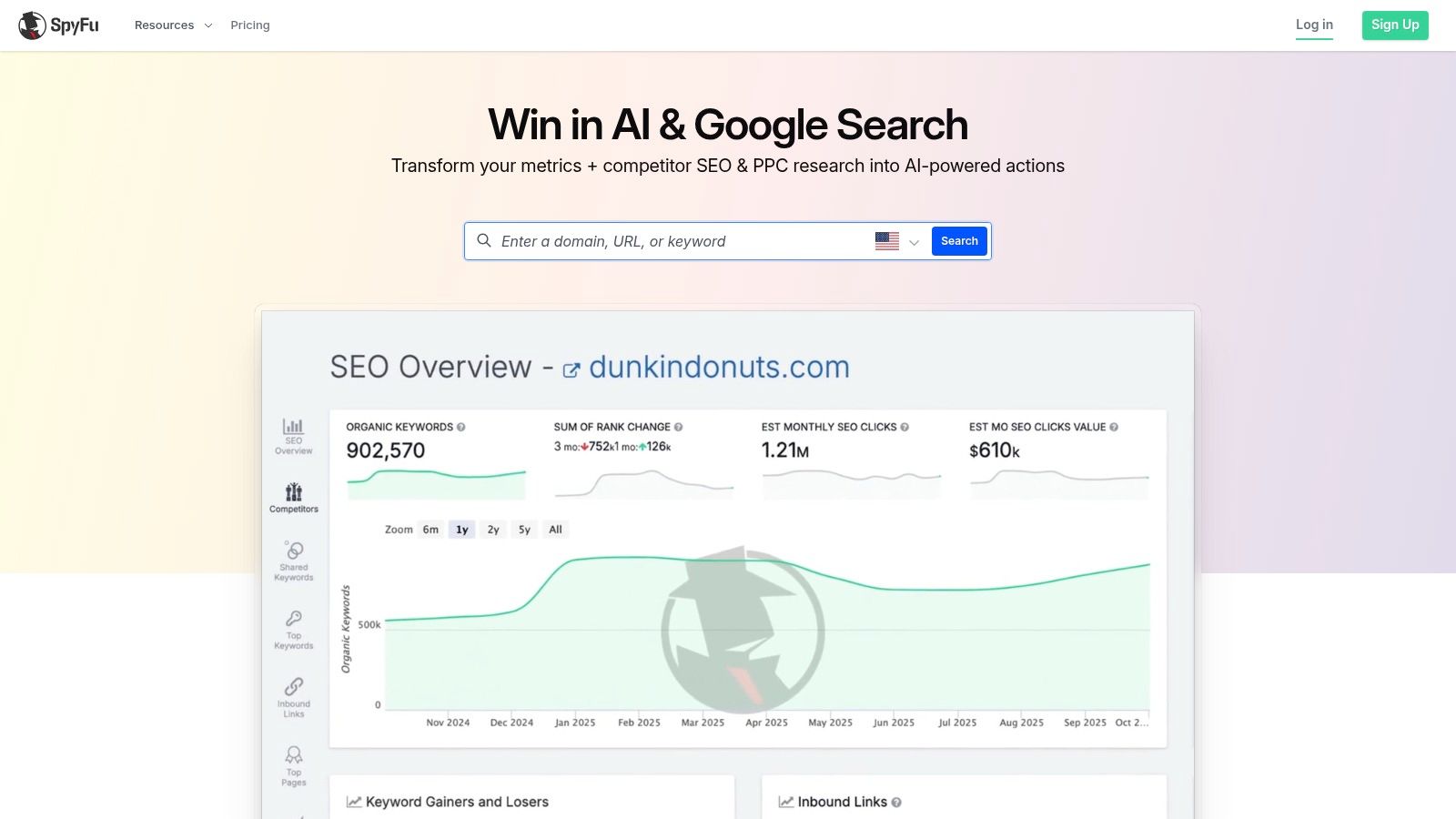
A competitor's paid keywords can help you choose what to write. SpyFu puts competitor rankings alongside advertising data, giving you a way to compare organic targets with terms competitors pay to advertise on. Treat ad activity as a research clue, not proof that a keyword will convert for your business.
Historical advertising data can add context: compare changes in a competitor's ad activity with movement in its organic pages. That helps assess whether a topic is worth investigating before you commit to a content brief. A content score alone won't answer that question.
SpyFu offers a limited free tier and paid plans with different search and export limits. Compare current plans on SpyFu's pricing page before buying, especially if you rely on frequent research or large exports.
SpyFu is a competitor research tool, not an in-editor content optimizer. It won't provide Surfer-style draft scoring or make backlink research its main job. Pair it with a writing tool if your workflow also needs page-level optimization.
7. Moz Pro
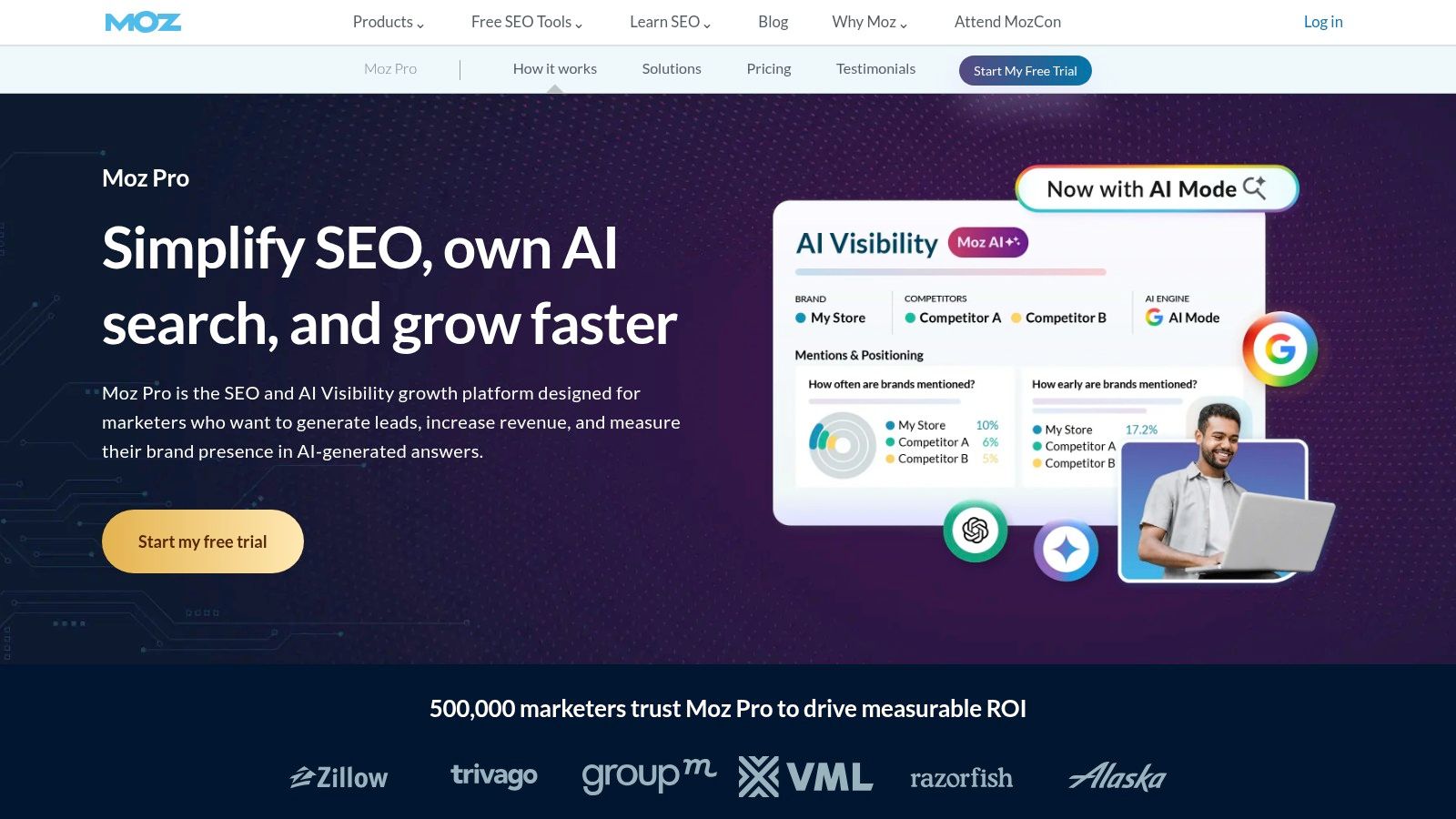
I consider Moz Pro when a team wants established research basics plus newer AI visibility checks. Keyword research, tracked rankings, link research, and site crawls are the core. Current plans add AI Overviews and AI visibility tracking, plus AI content briefs. That's a more complete Surfer replacement shape than Moz offered in the past.
I audit AI claims carefully, though. Google's AI features guidance says a page must be indexed and eligible to appear in ordinary Google Search with a snippet to be eligible as a supporting link in AI Overviews or AI Mode. So before I trust any citation report, I confirm indexability, check internal links to the page, and verify the page supports its claims directly. A page blocked from crawling won't get cited no matter what a brief says. Citation tracking shows me the gap. It doesn't fix the page.
Plan limits shape the value. Standard is $99 per month oder $79 per month billed yearly, with higher tiers raising site, keyword, and crawl allowances. Content briefs come in plan-dependent monthly quantities, so heavy publishing teams can outrun them.
I recommend it for teams that want research, tracking, and briefs without the largest suites' complexity. I don't recommend it if briefs are your main output. The brief allowance becomes the product limit you'll negotiate against every month.
8. Frase
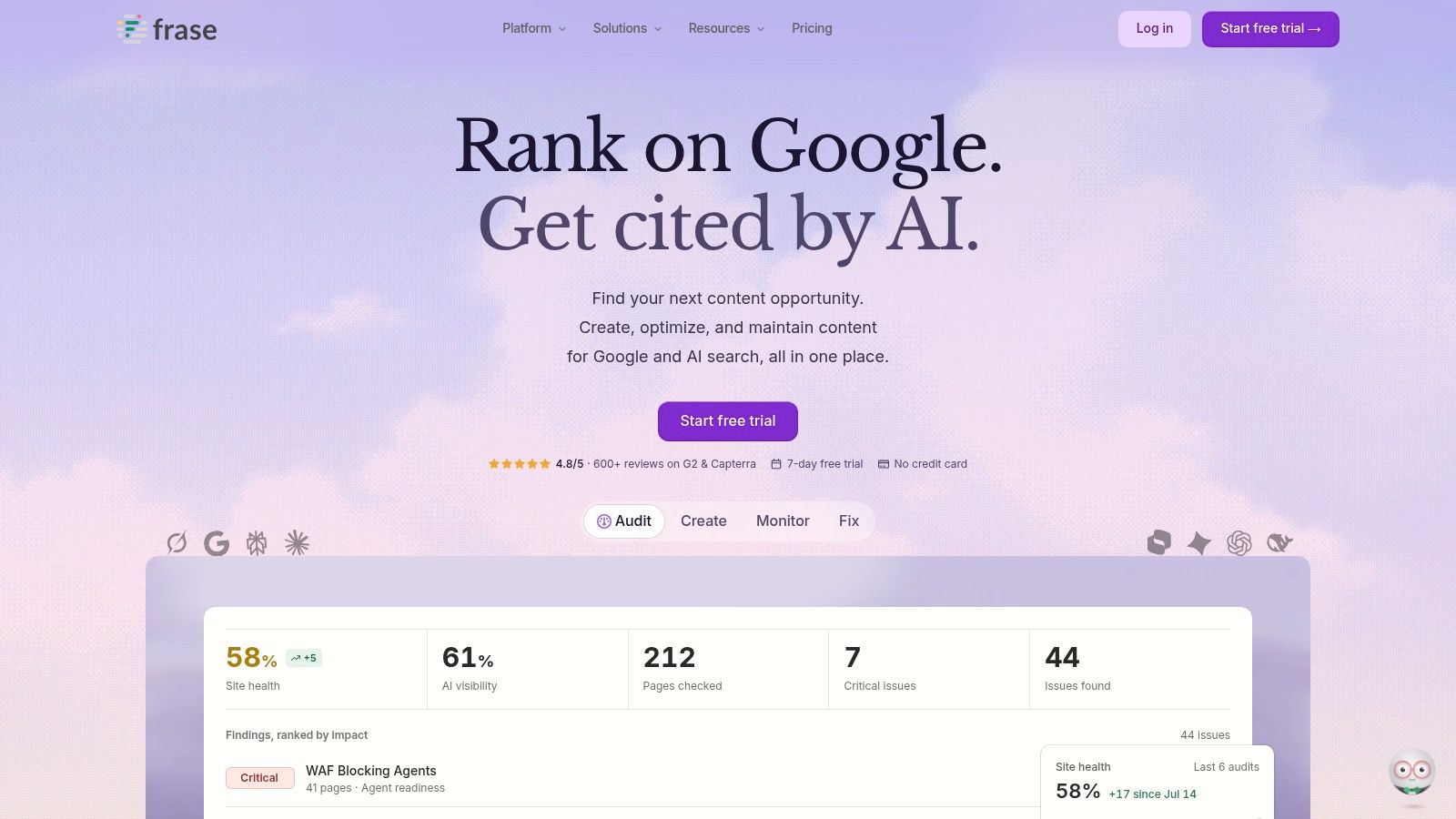
Frase is an in-editor optimizer with research and briefing features. It analyzes search results for a query, builds a content brief, and scores a draft as you write. Separate SEO and GEO scores cover traditional optimization and AI visibility. It can also support content refreshes, so teams can assess existing pages as well as plan new ones.
Treat the score as a check, not a writing target. Google's helpful content guidance says ranking systems prioritize helpful, reliable, people-first content. If a brief recommends related terms that make a sentence awkward, leave them out. Use the space for evidence, limitations, or practical details that help readers make a decision.
For a closer look at how SERP evidence can shape a brief, see this guide to building a content brief from search results. Frase's main trade-off is its focus: it helps with drafting and on-page optimization, but it is not a substitute for broader backlink research. The Frase plans offer a free trial and tiered paid options; check the current rates and limits before choosing a plan.
9. Content Harmony
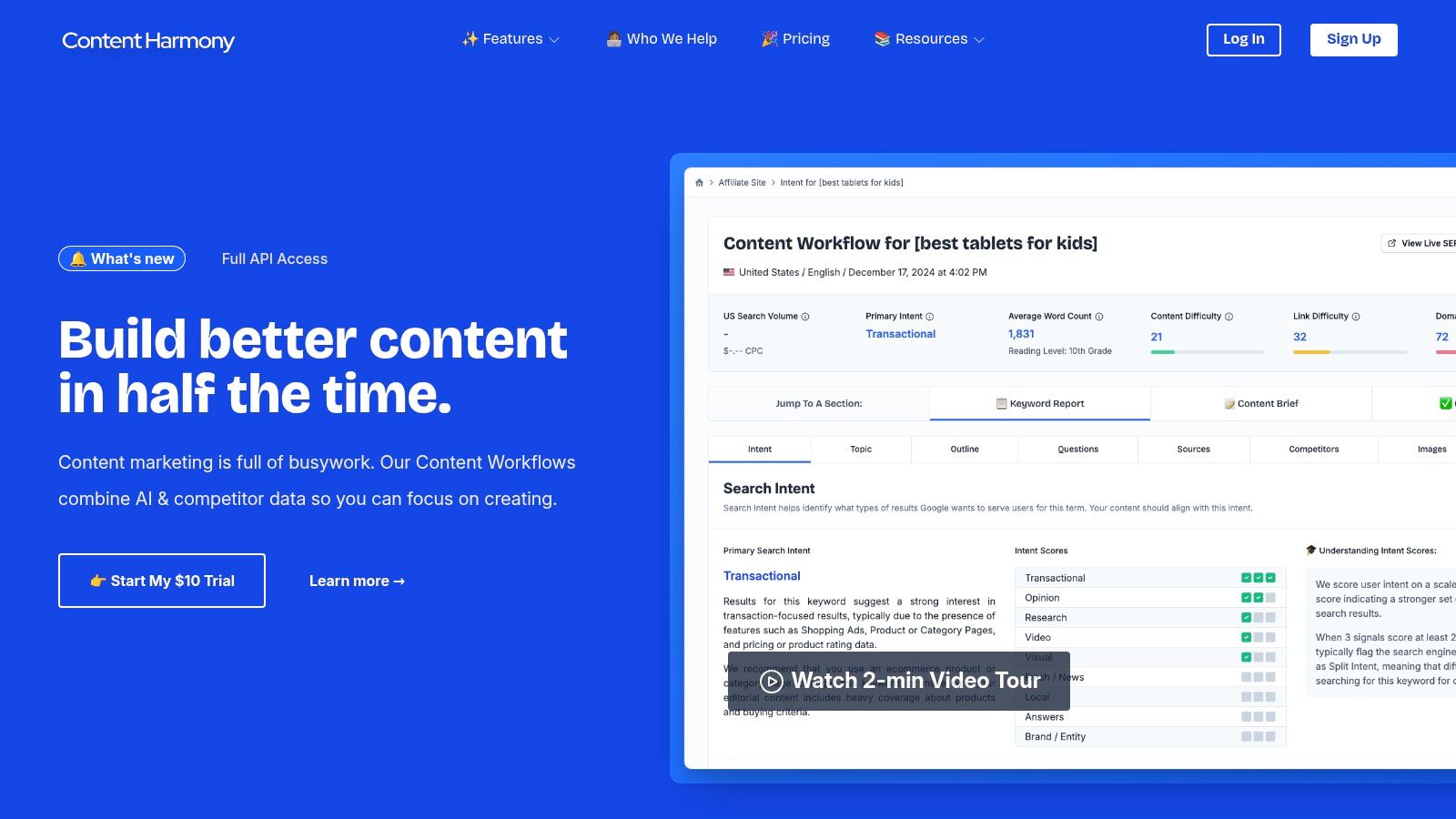
Content Harmony is a briefs layer for editorial teams. Its workflow connects keyword reports, content briefs, and content grading, giving writers and editors a shared process. That helps standardize briefs and reviews, but it does not replace the research suite needed to find what to write about.
Plans start at $50 per month for five workflows, with unlimited users and projects. Credits roll over for a limited period. A $10 trial for 10 workflow credits gives you a way to assess the process. Use briefs from your own work when trialing any brief tool; demo queries may not reflect the topics, constraints, or review standards your team handles.
Who It Fits
- Editorial teams: Unlimited users can make it easier to include writers and editors without a per-seat charge.
- Agencies producing client briefs: A shared grader gives clients a consistent quality check to follow.
Content Harmony does not cover backlink research, rank tracking, or technical audits, so pair it with a research suite if you need those capabilities. Workflow allowances can also constrain teams producing briefs at volume. Check how many briefs you create in a typical month before choosing a tier.
10. seoClarity
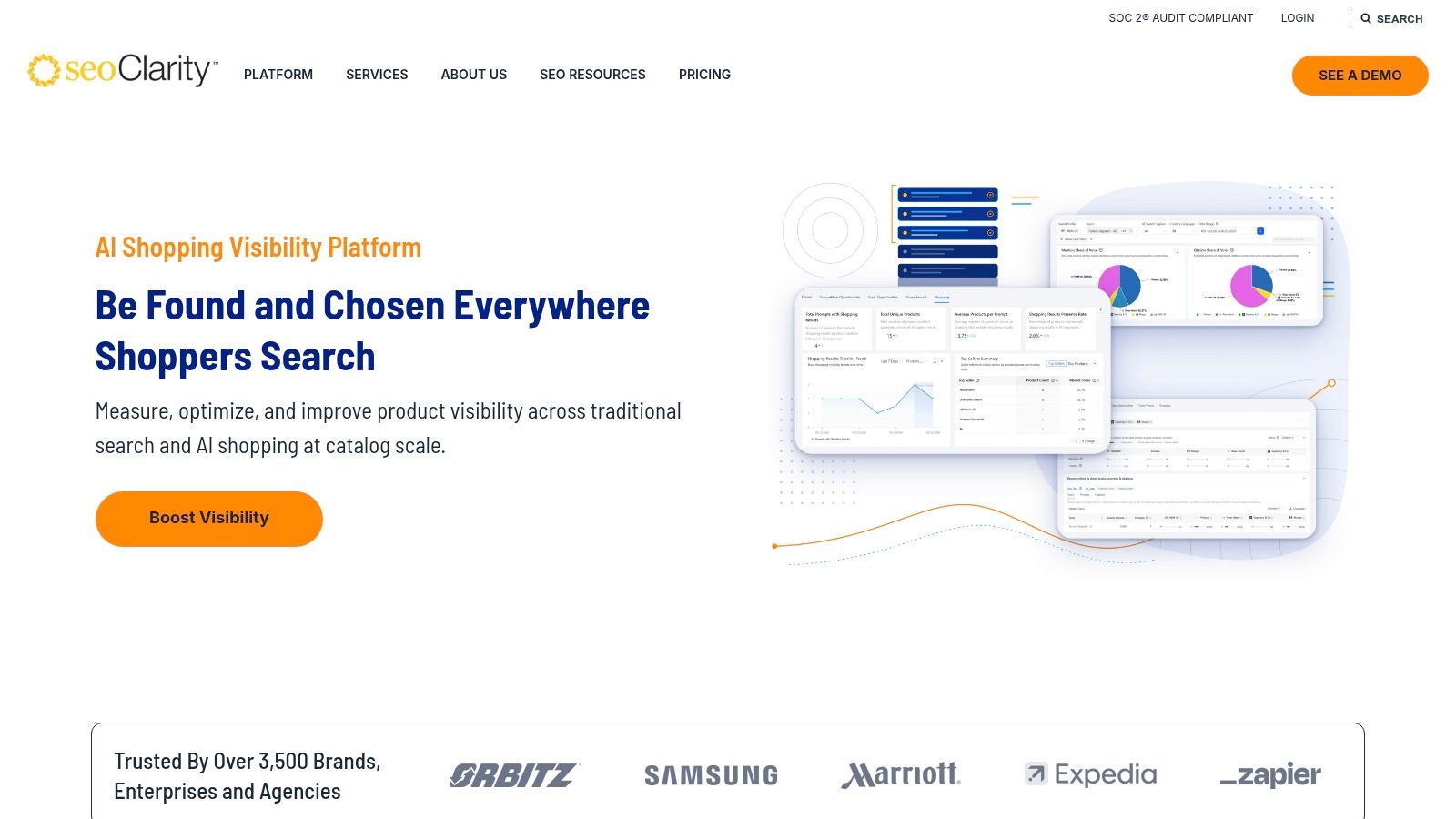
A team managing SEO across multiple domains may need more than a tool for scoring drafts. seoClarity is built for large SEO programs, with rank tracking, keyword and competitor research, content opportunities, content optimization, technical auditing, reporting, and integrations.
Its pricing is custom-quoted for enterprise buyers, and trials start with a demo. That makes it harder to evaluate quickly than a self-serve tool. For teams comparing options, factor in the sales process as well as the software.
If you can't test a tool on your own data within a week, you aren't evaluating software. You're evaluating a sales process.
seoClarity is worth considering when an organization needs configurable data workflows across many domains and has the staff to use them. For a solo operator or smaller site, the enterprise focus is likely more than the work requires. Choose it for the scale and workflow needs, not just because it has a broad feature set.
Surfer SEO alternatives at a glance
The main difference is what each tool helps you decide. Research suites show which topics, competitors, and pages to pursue. Content optimizers help shape and assess a draft. Use the “Best for” column to identify the gap you need to fill, not as a substitute for checking each tool's workflow.
| Item | Starting price | Free option or trial | Am besten für |
|---|---|---|---|
| SemDash | Free to start; paid plans include Starter, Business, and Elite | Free tools available | Keyword, backlink, competitor, and AI Overviews research |
| Ahrefs | $29/month | Free access for verified site owners | Competitor, keyword, and backlink research |
| Semrush | $139/month | Paid plans only | Broad SEO and digital marketing workflows |
| SE-Rangliste | Not specified | 14-day trial; no permanent free plan | SEO research, tracking, audits, and content tools |
| Serpstat | $497/year | 7-day trial | SEO research for individuals and agencies |
| SpyFu | $39/month, or $29/month billed annually | Limited free tier | Competitor research across organic search and Google Ads |
| Moz Pro | $99/month, or $79/month billed yearly | Paid plans only | SEO research and rank tracking |
| Frase | $49/month, or $39/month billed yearly | 7-day trial, no credit card required | Content research, briefs, writing, and optimization |
| Content Harmony | $50/month | $10 trial for 10 workflow credits | Editorial teams creating briefs and grading content |
| seoClarity | $2,500/month for Research & Content | Trial requires a demo | Enterprise SEO programs needing scalable data and integrations |
A low starting price does not tell you whether a tool can guide topic selection. Compare the research suite options for competitor and keyword discovery; compare the content-focused tools for brief creation and draft optimization. SemDash offers free research tools, while its Starter, Business, and Elite plans include keyword research, competition analysis, backlink research, AI SEO, and lead generation.
Choose the Tool That Fits Your Workflow, Not the Logo
I start every switch by naming the bottleneck in one sentence. If I can't, I don't buy anything. Topic selection problems need gap reports, SERP history, and competitor pages. Draft quality problems need briefs and scoring. Link prospecting problems need referring-domain context. Reporting problems need tracking and share of voice. One tool rarely fixes all four, and pretending otherwise is how stacks bloat.
That bloat has a cost. In MarTech's 2025 State of Your Stack survey von 169 marketing and marketing-operations professionals, 62.1% reported using more tools than two years earlier, and budget constraints were the leading barrier to adopting new products. I consolidate where I can. Every extra subscription has to change a decision I make weekly, or I cancel it.
I also check whether the query is worth pursuing at all. A European Parliament briefing cites an approximately 58% reduction in position-one click-through rate for affected informational keywords between December 2023 and December 2025. A high-volume query answered inside an AI summary can send fewer visits than a smaller query with no summary. I check AI Overview presence, intent, and competitor traffic share before I brief anything. Sometimes the right decision is to skip the query. A good alternative helps me make that call. A scoring editor never will.
Here's the test I run. I pick one page cluster and one alternative, and I give it two weeks. I log every decision the tool changed. Did it kill a bad topic, surface a gap, or redirect a brief? If the log is empty, the tool is decoration, whatever the demo looked like. I also score one page that ranks well and one that doesn't. If an editor can't tell them apart, its model doesn't match my niche.
Price everything in real units. Count briefs, audits, exports, and tracked keywords from last month. Then compare plans at that volume, including add-ons. Headline prices hide the limits you'll hit first.
Set expectations before you start. No tool on this list guarantees rankings, traffic, or revenue, and we don't guarantee specific search rankings, traffic increases, or financial outcomes either. Tools supply evidence. You still supply judgment, expertise, and the work of publishing something worth ranking. Pick the smallest tool that changes your decisions, run the two-week test, and keep it only if the log proves it earned its seat.
If your bottleneck is deciding what to write, SemDash brings keyword gaps, backlink research, 12-month SERP history, and AI Overviews citation tracking into one workspace, so you can pick topics from evidence instead of scores. Start the free trial, run it against one real page cluster for two weeks, and keep it only if it changes decisions you'd otherwise have guessed at.