%20(1)-B86R08ZzwhPzS6UZbG3mSxRWPCwGwn.png)


Best SEO Tools in 2026: Top Picks for Every Use Case

TL;DR:
- The best SEO tools in 2026 are those that match your primary job, whether that’s content, backlinks, or technical SEO. Semdash offers affordable all-in-one research with AI visibility tracking, while specialized tools like Ahrefs and Screaming Frog excel in backlinks and technical audits respectively. Choosing the right tool depends on your goals, team size, budget, and need for AI monitoring, with free options like Google Search Console suitable for initial use.
The best SEO tools are the ones that match your primary job. For most marketers, that means an all-in-one platform for research and tracking, plus a specialist crawler for deep technical audits. Here are the top picks for 2026:
- Best overall (AI visibility + affordability): Semdash — keyword research, backlink analysis, AI Overview monitoring, and competitor intelligence in one credit-based platform; free tools available.
- Best for enterprise all-in-one: Semrush — the broadest feature set on the market, with deep AI visibility tracking across major LLM surfaces. Starts around $139.95/month.
- Best for backlinks: Ahrefs — the largest and fastest-refreshing backlink index, built for link builders and competitive research. Free limited tier available.
- Best for content optimization: Surfer (SurferSEO) — real-time content scoring against top-ranking SERP results. Trial available.
- Best for technical audits: Screaming Frog SEO Spider — the industry-standard desktop crawler. Free tier allows a limited number of URLs to be crawled.
- Best free starter: Google Search Console — direct indexing and performance data from Google. Completely free.
- Best value for small teams: Mangools — a beginner-friendly bundle covering keyword research and rank tracking at a fraction of enterprise pricing.
- Best for AI-era content workflows: SEO.ai — AI-assisted drafting with on-page optimization built in.
What are the best SEO tools right now?
How we evaluated: tools were assessed across keyword research depth, site audit capability, rank tracking accuracy, backlink index size and freshness, content optimization workflow, AI visibility monitoring, reporting flexibility, usability, and overall value. Evaluation criteria align with the axes used across leading independent roundups.
| Werkzeug | Am besten für | Starting price | Free tier / trial | Standout feature | Skill level |
|---|---|---|---|---|---|
| Semdash | Affordable all-in-one + AI visibility | Credit-based tiers | Free tools available | AI Overview monitoring + semantic clustering | Beginner to advanced |
| Semrush | Enterprise all-in-one | ~$139.95/month | 7-day trial | Broadest feature set + LLM visibility | Intermediate to advanced |
| Ahrefs | Backlink-Forschung | $139.95/month | Limited free tier | Largest backlink index | Intermediate |
| Moz Pro | Beginner-friendly authority tracking | ~$99/month | 30-day trial | Domain Authority metric | Beginner to intermediate |
| Screaming Frog | Technical crawling and audits | licensed version priced in the mid-hundreds of pounds yearly | Free tier allows a limited number of URLs to be crawled | Deep crawl configuration | Intermediate to advanced |
| Surfer | Content optimization | — | Trial available | Real-time SERP content scoring | Beginner to intermediate |
| Mangools | Budget keyword + rank tracking | ~$29/month | 10-day trial | Easy-to-use bundle | Beginner |
| Google Search Console | Site performance monitoring | Kostenlos | Always free | First-party Google data | All levels |
| SE-Rangliste | Local SEO + white-label reporting | — | 14-day trial | White-label reports on higher tiers | Beginner to intermediate |
| Clearscope | Editorial content briefs | — | Demo available | Content grade + brief workflow | Intermediate |
Quick decision badges:
- Best value: Semdash (credit-based pricing, AI monitoring included)
- Best for backlinks: Ahrefs
- Best free tool: Google Search Console
- Best for beginners: Mangools or Moz Pro
- Best for content teams: Surfer or Clearscope
- Best for technical SEOs: Screaming Frog
How do you choose the right SEO tool for your needs?
The wrong tool wastes budget fast. Before you commit to a subscription, map your primary goal to the tool category that solves it.
Primary decision criteria:
- Primary job: Are you building content, chasing backlinks, fixing technical issues, or tracking local rankings? Each job has a specialist tool that outperforms a generalist on that axis.
- Team size and seats: Solo operators rarely need enterprise seat counts. Check whether the plan you’re buying includes the number of users your workflow actually requires.
- Budget: Monthly costs for capable all-in-one tools range from roughly $29 (Mangools) to $139.95+ (Semrush). Stacking a free tier with one paid specialist often beats a mid-tier all-in-one.
- Data freshness: If you’re doing active link building, backlink index freshness matters. Ahrefs and Semrush refresh their indexes frequently; smaller tools may lag by days or weeks.
- AI visibility monitoring: AI Overview tracking has become a genuine differentiator in 2026. Tools that surface where your site appears inside AI summaries give content teams a competitive edge that standard rank tracking misses.
- Reporting and white-label: Agencies serving clients need exportable, brandable reports. SE Ranking and Semrush both offer white-label options; most entry-level tools do not.
- Integrations: Check whether the tool connects to Google Analytics 4, Google Search Console, Slack, or your CMS. Missing integrations mean manual data exports every week.
Diagnostic questions to ask before buying:
- Do I need enterprise backlink freshness, or will a weekly refresh do?
- Will I use more than three of the tool’s core modules, or just one?
- Does the plan include enough keyword or crawl credits for my site size?
- Can I export data freely, or does the tool lock reports behind higher tiers?
- Is there a real trial period, or just a limited demo?
Red flags to watch for in trials and contracts:
- Data export limits that only appear on the pricing fine print
- Seat restrictions that charge per user on top of the base plan
- Auto-renewal clauses with no prorated refund policy
- Crawl credit caps that make a full site audit impossible on the starter tier
Profi-Tipp: During any trial, run one complete workflow end-to-end: import your keyword set, audit your top 10 pages, implement one fix, and check whether GSC impressions move within 30 days. If the tool’s recommendations don’t produce a measurable signal in that window, the data quality probably isn’t worth the price.
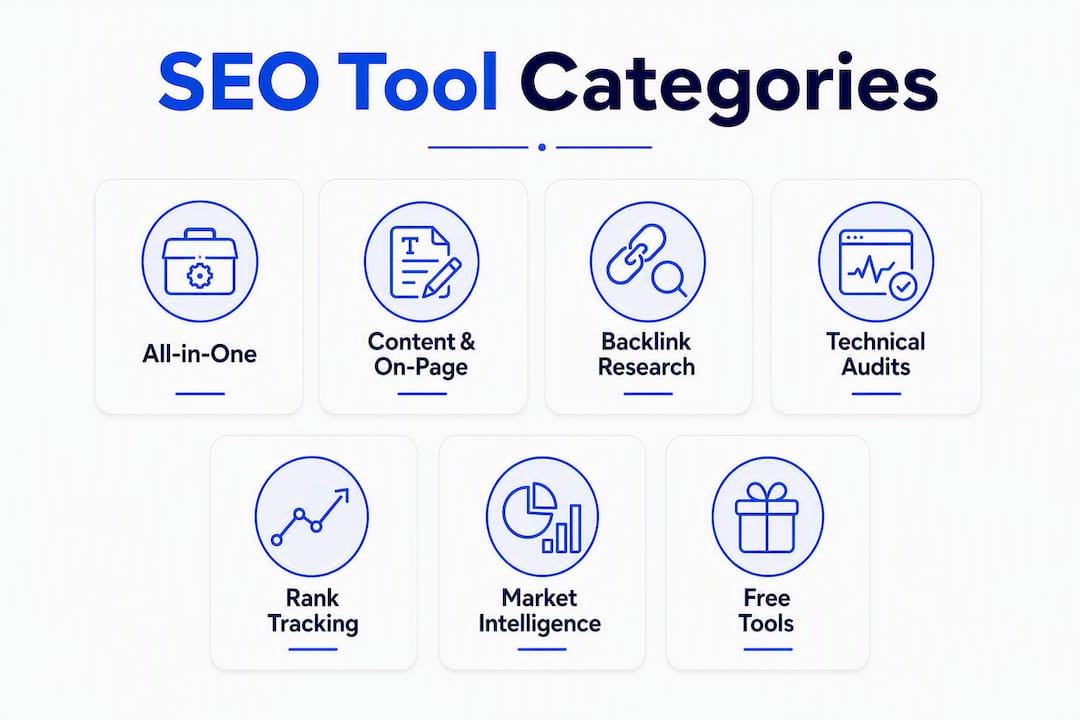
Best SEO tools by category: profiles, pros, and cons
All-in-one SEO platforms
Semdash is the recommended all-in-one pick for teams that need AI visibility monitoring without enterprise-level pricing. Its credit-based model means you pay for what you use rather than a flat seat fee, which suits agencies juggling multiple client domains. Core features cover keyword research, SERP analysis, competitor intelligence, semantic keyword clustering, backlink discovery, and AI Overview mention tracking — the last of which is increasingly rare at this price point.
Semrush is the most widely recognized all-in-one SEO platform among third-party reviewers, covering keyword research, competitor analysis, backlink discovery, site auditing, and AI visibility tracking across major LLM surfaces. The breadth is unmatched. The cost reflects that: plans start at a higher enterprise pricing level, which is steep for solo operators.
- Pros: — Deepest feature set available; strong AI visibility coverage; large user community and learning resources
Moz Pro takes a gentler approach. Its Domain Authority metric is the most widely cited authority signal in the industry, and the interface is genuinely easier to navigate than Semrush or Ahrefs for marketers who are newer to SEO. The trade-off is a smaller backlink index and fewer advanced features.
Morningscore is a gamified SEO platform aimed at small businesses and solo operators who want a motivating, dashboard-first experience. It covers rank tracking, site health, and basic backlink monitoring. Worth checking at morningscore.io for a different take on tool UX.

seoClarity targets enterprise teams with deep content intelligence, rank tracking at scale, and workflow automation. It’s overkill for most small agencies but genuinely powerful for large in-house teams managing thousands of pages.
SEOptimer is a lightweight audit tool that generates quick site health reports. It’s useful for client prospecting and one-off audits but lacks the depth for ongoing SEO management.
Backlink and competitor research
Ahrefs holds the strongest position for pure backlink intelligence. Its index is large, link discovery is fast, and the Site Explorer interface makes competitive research intuitive. Independent 2026 roundups consistently name Ahrefs as the leading backlink-focused tool, and the data holds up. The free tier is limited, but the paid plans deliver genuine depth.
- Pros: Largest backlink index; fast link discovery; strong competitor traffic analysis
- Cons: No free full access; content tools are secondary to link research
- Pricing: Starts at a professional monthly subscription cost; limited free tier
SimilarWeb operates differently from standard SEO tools. Its strength is traffic source analysis and audience behavior data — useful for market intelligence and understanding where competitor traffic actually comes from, not just which keywords they rank for.
- Pros: Traffic source breakdowns; audience overlap analysis; useful for market research
- Cons: Not a replacement for keyword or backlink tools; expensive for full access
- Pricing: Free limited tier; paid plans vary
BuzzSumo focuses on content performance and social sharing data. It’s the go-to tool for identifying which content formats and topics generate the most engagement in a niche, which makes it useful for content strategy rather than pure SEO research.
Content and on-page optimization
Surfer (SurferSEO) scores pages against the top-ranking SERP results in real time, flagging gaps in word count, heading structure, entity coverage, and keyword density. Content-oriented tools like Surfer are repeatedly cited for speeding up on-page optimization workflows. The content editor is where most users spend their time, and it’s genuinely useful for writers who need structured guidance rather than guesswork.
- Pros: Real-time SERP-driven content scoring; clear on-page suggestions; integrates with Google Docs
- Cons: Doesn’t replace a full SEO suite; pricing climbs quickly for teams
- Pricing: Starts at a moderate monthly price; trial available
Clearscope takes a similar approach but leans harder into content grading and brief creation. Editorial teams building content at scale use it to ensure topical depth before a writer starts drafting. The content grade signal is strong and the brief workflow is clean.
- Pros: Strong content-grade signals; excellent brief generation; trusted by large editorial teams
- Cons: Expensive for solo operators; no backlink or rank tracking
- Pricing: Starts at a premium monthly price; demo available
SEO.ai combines AI-assisted drafting with on-page optimization signals, making it useful for teams that want to produce first drafts quickly and then optimize within the same tool. It sits in the same cluster as Surfer and Clearscope but leans more heavily on AI generation.
AnswerThePublic und AlsoAsked both map question-based queries visually, which is useful for building out H2 structures and FAQ sections. AnswerThePublic pulls autocomplete data from search engines; AlsoAsked specifically mines the “People Also Ask” box. Neither replaces a full keyword tool, but both are fast for content ideation.
AirOps und Gumloop are workflow automation tools that connect SEO data sources to content pipelines. They’re not SEO tools in the traditional sense, but teams running high-volume content operations use them to automate brief generation, content scoring, and publishing workflows.
Claude (Anthropic’s AI assistant) is increasingly used by SEO teams for content drafting, outline generation, and SERP analysis interpretation. It’s not an SEO tool natively, but it integrates into content workflows where structured prompting replaces manual research steps.
ProductRank.ai focuses specifically on product page optimization and e-commerce SEO, tracking how product listings rank across search and shopping surfaces.
Technical crawling and auditing
Screaming Frog SEO Spider is the industry standard for technical audits. The free tier crawls up to 500 URLs, which covers small sites completely. The licensed version, priced around two hundred pounds per year, unlocks unlimited crawling, JavaScript rendering, custom extraction, and scheduled crawls. No other desktop crawler matches its configurability for site migrations, redirect audits, and structured data checks.
- Pros: Unmatched crawl configuration; exportable audit data; free 500-URL tier
- Cons: Desktop-only; requires technical knowledge to interpret results
- Pricing: Free (500 URLs); ~£199/year for licensed version
Seobility offers a cloud-based alternative to Screaming Frog for teams that prefer browser-based auditing. It’s less configurable but easier to share results with non-technical stakeholders.
Pagespeed Insights and the Rich Results Test are free Google tools that handle two specific technical jobs: measuring Core Web Vitals and validating structured data markup. Both are essential checks before any site launch or post-migration audit.
Yoast SEO und Rank Math are WordPress plugins rather than standalone tools, but they handle on-page technical SEO at the CMS level: meta tags, schema markup, XML sitemaps, and breadcrumb configuration. Rank Math has pulled ahead on features in recent years, particularly for schema. Schemantra is a more specialized schema generation tool for teams that need granular structured data control beyond what plugins provide.
Compress PNG is a simple image compression utility. It’s not an SEO platform, but page speed optimization often starts with image file sizes, and it’s a practical free tool for that specific job.
Rank tracking and local SEO
SE-Rangliste leads this category for small agencies. Its rank tracking is accurate, the reporting is clean, and white-label options are available on higher tiers — which matters when you’re delivering reports to clients under your own brand.
- Pros: White-label reporting; solid local rank tracking; competitive pricing
- Cons: Backlink data thinner than Ahrefs or Semrush
- Pricing: Starts at a moderate monthly price; 14-day trial
AccuRanker und Nightwatch both specialize in high-frequency rank tracking with fast refresh rates. AccuRanker is the stronger choice for agencies tracking hundreds of keywords across multiple clients; Nightwatch offers a cleaner interface for smaller teams.
Keywords Everywhere is a browser extension that overlays keyword metrics directly in the SERP. It’s a low-cost complement to a full platform, not a replacement. Useful for quick keyword checks during research without switching tabs.

Morningscore covers rank tracking alongside its gamified health score, making it approachable for small business owners who find traditional dashboards intimidating.
Market intelligence
SimilarWeb is the clearest choice when you need to understand traffic behavior rather than keyword rankings. It shows where a competitor’s audience comes from, which channels drive their growth, and how your site’s traffic mix compares to category benchmarks.
Google Trends is free and underused. It shows relative search demand over time, which is useful for spotting seasonal patterns, validating whether a topic is growing or declining, and timing content publication to demand peaks.
AI Optimization Checker is a newer tool category focused on measuring how well a site’s content appears inside AI-generated answers. As AI search surfaces grow, this type of monitoring is becoming a standard part of the audit toolkit.
Free and first-party tools
Google Search Console is non-negotiable. It provides direct indexing data, search performance by query and page, Core Web Vitals reports, and coverage issue alerts — all from Google itself. No paid tool replicates this data source.
Google Keyword Planner gives search volume ranges and CPC data tied to Google Ads. The volume data is bucketed (not exact), but it’s authoritative and free.
Bing Webmaster Tools mirrors Google Search Console’s functionality for Bing’s index. Bing’s market share in the US is meaningful enough that ignoring it leaves traffic on the table, and the tool is free.
KeySearch und Ubersuggest are budget keyword tools that work well for beginners who need simple keyword suggestions without the complexity of a full platform. Independent roundups flag both as solid entry-level options for sites that aren’t yet ready to invest in Semrush or Ahrefs.
What free SEO tools should you start with?
Top SEO practitioners recommend starting with free Google tools and adding one paid specialist as traffic grows — not the other way around. Here’s the practical starter kit:
Essential free tools:
- Google Search Console — verify your site, check indexing status, and identify which queries drive impressions
- Google Keyword Planner — validate search demand for your target topics
- Google Trends — check whether a topic is growing or declining before investing content resources
- Bing Webmaster Tools — replicate your GSC setup for Bing’s index; takes 15 minutes and covers a meaningful traffic source
- Pagespeed Insights — run Core Web Vitals checks on your top pages
- Rich Results Test — validate structured data markup before and after implementation
- Screaming Frog (free tier) — crawl up to 500 URLs to catch broken links, redirect chains, and missing meta tags
Quick-start onboarding checklist (first 30 days):
- Verify your site in Google Search Console and Bing Webmaster Tools. Check for crawl errors and coverage issues immediately.
- Identify your top 10 pages by impressions in GSC. These are your highest-leverage pages for quick optimization.
- Run a Screaming Frog crawl on your top 50 URLs. Fix any broken links, missing title tags, or duplicate meta descriptions.
- Use Google Keyword Planner and Google Trends to validate the primary keyword for each top page. Confirm you’re targeting terms with real demand.
- Set a ranking baseline. Note your current position for each target keyword so you can measure movement in 60 days.
When to upgrade from free tools: Free tools are sufficient while your site is under roughly 500 pages and you’re not actively building links or competing in a crowded niche. Once you need backlink intelligence, competitor gap analysis, or AI visibility monitoring, a paid platform pays for itself quickly.
How much do SEO tools cost, and which plan fits your budget?
Pricing across the category spans from free to several hundred dollars per month. The table below covers typical starting costs for the tools most readers will actually consider.
| Werkzeug | Starting price | Free tier | Best plan for |
|---|---|---|---|
| Semdash | Credit-based tiers | Free tools available | Solo operators, agencies, AI visibility needs |
| Semrush | ~$139.95/month | 7-day trial | Large teams, enterprise |
| Ahrefs | $139.95/month | Limited free tier | Link builders, competitive research |
| Moz Pro | ~$99/month | 30-day trial | Beginners, authority tracking |
| Screaming Frog | licensed version priced in the mid-hundreds of pounds yearly | Free (500 URLs) | Technical SEOs, migrations |
| Surfer | — | Trial available | Content teams |
| SE-Rangliste | — | 14-day trial | Small agencies, local SEO |
| Mangools | ~$29/month | 10-day trial | Freelancers, beginners |
| Clearscope | — | Demo only | Editorial teams |
| Google Search Console | Kostenlos | Always free | Everyone |
Plan recommendations by user type:
- Solo blogger or content creator: Start with Google Search Console, Google Keyword Planner, and Screaming Frog’s free tier. Add Mangools or Semdash’s credit-based starter plan when you need keyword difficulty data and rank tracking.
- Freelance SEO consultant: Semdash covers keyword research, backlink analysis, and competitor intelligence at a price point that makes sense for client work without locking you into an enterprise contract.
- In-house marketer: Semrush or Semdash depending on budget. Semrush wins on raw feature breadth; Semdash wins on cost-per-feature for teams that don’t need every module.
- Small agency (2–10 people): SE Ranking for white-label reporting plus Semdash for research. Screaming Frog licensed for technical audits. This stack covers most client deliverables without Semrush’s price tag.
- Enterprise: Semrush or seoClarity, depending on whether content intelligence or rank tracking at scale is the priority.
Cost-saving strategies:
- Annual billing typically saves 15–20% across most platforms. If you’ve validated a tool during a trial, switch to annual immediately.
- Stack a free tier with one specialist tool rather than buying a mid-tier all-in-one that covers everything poorly. Google Search Console plus Ahrefs for backlinks plus Screaming Frog for audits is a stronger stack than a $99/month generalist for many users.
- Use trial periods strategically. Run the 30-day trial workflow described in the buying criteria section: import keywords, audit pages, implement fixes, measure GSC movement. If the tool’s recommendations don’t produce a signal, don’t renew.
- Check refund and cancellation policies before subscribing. Most SaaS SEO tools do not offer prorated refunds on annual plans. Screaming Frog’s annual license is straightforward; enterprise platforms vary.
Wichtige Erkenntnisse
The most efficient SEO tool stack in 2026 pairs an all-in-one platform for research and tracking with a specialist crawler for technical audits, and adds AI visibility monitoring as a third layer for teams competing in AI-search surfaces.
| Punkt | Details |
|---|---|
| Match tool to primary job | Content, backlinks, technical audits, and rank tracking each have specialist tools that outperform generalists on that axis. |
| Start free, then scale | Google Search Console, Screaming Frog’s free tier, and Google Keyword Planner cover most needs for sites under 500 pages. |
| AI visibility is now a real criterion | Tools that track AI Overview and LLM mentions give content teams a competitive edge standard rank tracking misses. |
| Screaming Frog is the technical standard | The free tier crawls 500 URLs; the licensed version costs ~£199/year and handles full site migrations. |
| Semdash for value + AI monitoring | Semdash’s credit-based plans include AI Overview tracking and integrated keyword and backlink tools at a lower cost than Semrush or Ahrefs. |
The tool stack question nobody asks correctly
Most SEO tool comparisons frame the decision as “which single platform should I buy?” That’s the wrong question. The right question is: “What is my primary bottleneck right now, and which tool removes it fastest?”
A content team that buys Ahrefs because it’s the most respected name in SEO will spend most of their time in a tool built for link builders. A solo blogger who subscribes to Semrush at $139.95/month to track 20 keywords is paying for 80% of features they’ll never open. The mismatch between tool capability and actual workflow is where most SEO budgets leak.
The practical rule that holds across most real projects: one all-in-one for research and tracking, one specialist crawler for technical audits, and free Google tools as the foundation. That stack covers keyword discovery, competitor analysis, backlink monitoring, site health, and indexing data without significant overlap. Adding a content scoring tool like Surfer makes sense once content production is the primary growth lever, not before.
On AI visibility: this is the criterion most buyers underweight in 2026. Standard rank tracking tells you where you appear in the ten blue links. AI Overview monitoring tells you whether your content is being cited inside Google’s AI summaries, Perplexity answers, or ChatGPT responses. Those are different surfaces with different optimization requirements, and the gap between teams that track them and teams that don’t is widening. Semdash’s AI Overview checker is one of the few affordable entry points into this monitoring layer.
The 90-day ROI test is simple: track GSC impressions for your target pages at the start of a tool subscription, implement the tool’s top recommendations, and measure impression movement at 30, 60, and 90 days. If impressions aren’t moving, the tool’s recommendations aren’t matching your site’s actual opportunity. That’s the signal to reassess, not to add more tools.
Semdash covers the full research stack at a fraction of enterprise pricing
Most all-in-one SEO platforms charge enterprise prices for features that only enterprise teams actually use. Semdash is built differently: credit-based pricing means you pay for the research you run, not for a seat count that scales with your headcount. For agencies managing multiple client domains, that model cuts costs significantly compared to Semrush’s per-seat structure.
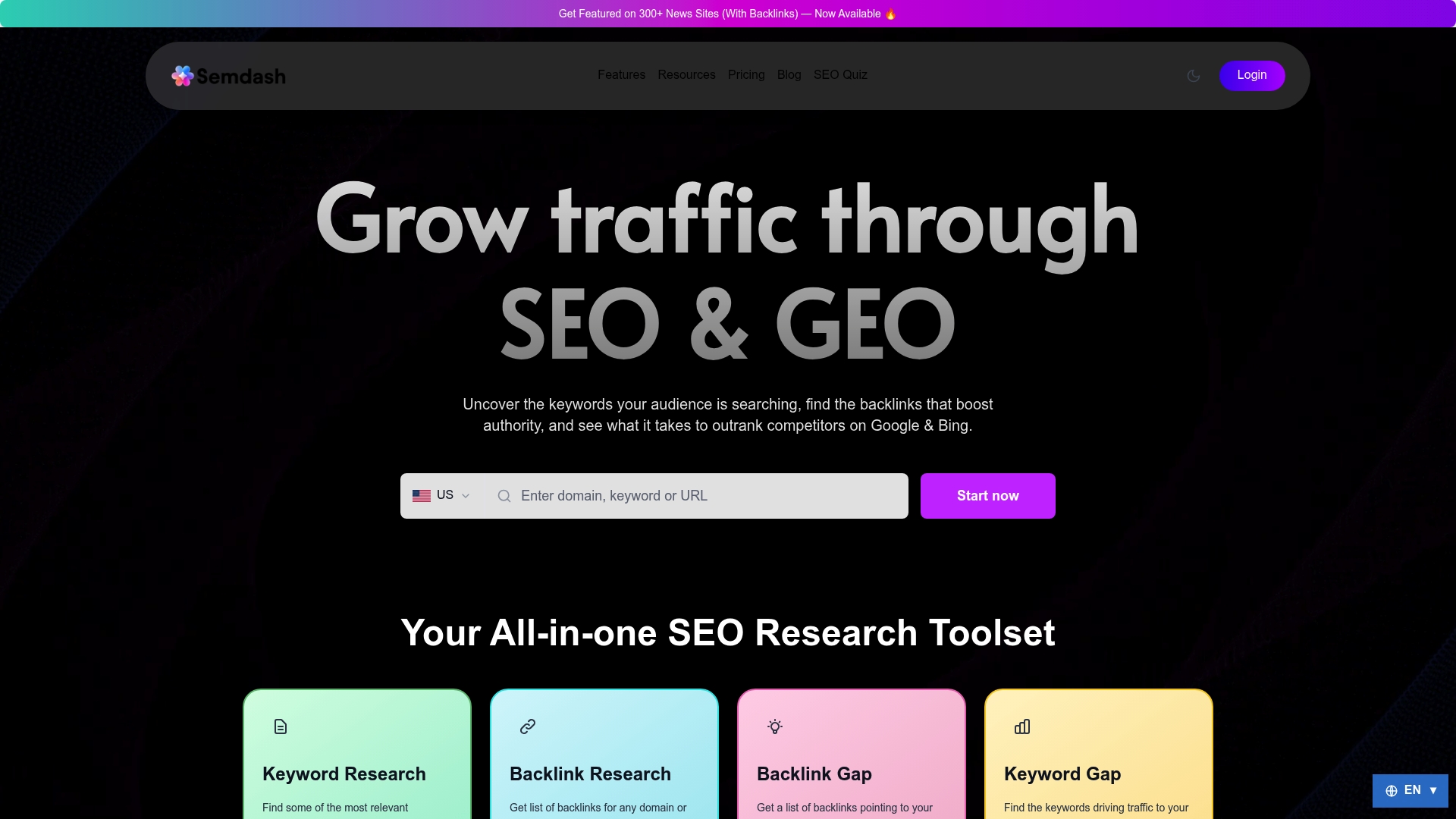
The core research stack includes keyword discovery, SERP analysis, semantic keyword clustering, backlink profile analysis, competitor gap research, and AI Overview mention tracking. That last feature is where Semdash pulls ahead for teams competing in 2026’s AI-search environment: knowing whether your content appears inside Google’s AI summaries is now as important as knowing your keyword rankings. You can test the platform’s capabilities immediately through Semdash’s free SEO tools before committing to a paid plan. For teams ready to go deeper, the Keyword-Recherche-Tool and competitor analysis modules are the fastest way to identify gaps your current strategy is missing. Start with the free tools, run one real research workflow, and see whether the data quality matches your needs.
Nützliche Quellen und weiterführende Lektüre
- Best SEO Tools for Keyword Research & Audits — TechnologyAdvice — confirms the standard evaluation axes (keyword research, audits, rank tracking, backlinks, content, usability) used to compare platforms
- Screaming Frog SEO Spider pricing — verifies the 500-URL free crawl limit and ~£199/year licensed pricing
- My List of the 7 Best SEO Tools in 2026 — G2 — G2’s feature ratings and category rankings for Semrush, Google Search Console, Ahrefs, and Google Trends
- AI Visibility Audit: A 2026 Guide for Small Businesses — SOSEI Blog — background on AI visibility audits and why monitoring AI search surfaces matters for content strategy
Häufig gestellte Fragen
What is the most used SEO tool in 2026?
Semrush is the most widely used all-in-one SEO platform by market recognition, with Google Search Console being the most universally installed tool since it’s free and provides first-party Google data every site owner needs.
Is SEO dead or still worth investing in?
SEO is evolving, not dying. Demand for authoritative, well-structured content and strong technical site health remains central in 2026, with AI search surfaces adding a new optimization layer rather than replacing traditional search.
Can ChatGPT or other AI tools replace dedicated SEO software?
AI assistants like Claude and ChatGPT are useful for content drafting and outline generation, but they don’t provide keyword volume data, backlink indexes, crawl audits, or rank tracking. They complement SEO tools; they don’t replace them.
What are the four main types of SEO?
The four types are on-page SEO (content and keyword optimization), off-page SEO (backlinks and authority building), technical SEO (site structure, crawlability, and page speed), and local SEO (geographic relevance and Google Business Profile optimization). Different tools specialize in each type.
Which SEO tool gives the best value for small businesses?
Semdash’s credit-based plans offer keyword research, backlink analysis, and AI Overview monitoring at a lower cost than Semrush or Ahrefs, making it a strong fit for small businesses that need a full research stack without enterprise pricing.